

Walking into Carabao Cup betting without understanding the available markets is like showing up to a restaurant and ordering without looking at the menu. Sure, you might end up with something decent, but you’re probably missing out on options that suit your taste better. I’ve watched countless punters stick to the basic match result market simply because it’s familiar, completely ignoring the specialized markets where the real value often hides.
The thing about cup competitions is they create betting opportunities that don’t exist in regular league football. The single-elimination format changes tactical approaches. Heavy rotation makes form guides nearly worthless. Motivation swings wildly depending on each club’s broader objectives. All of this creates an ecosystem of betting markets that require different analysis than what you’d use for Premier League weekends.
What I want to do here is walk you through the entire landscape of Carabao Cup betting markets, from the absolute basics through to the specialized options that most casual punters never touch. This isn’t about overwhelming you with choices – it’s about showing you where different types of value appear and helping you match your analytical strengths with the markets that reward them.
Some of these markets will click with you immediately. Others might seem pointless until you understand the specific situations where they shine. The goal isn’t to bet on everything, but to expand your toolkit so that when you spot an opportunity, you know exactly which market lets you exploit it most effectively.
Match Result: The Foundation Everyone Knows
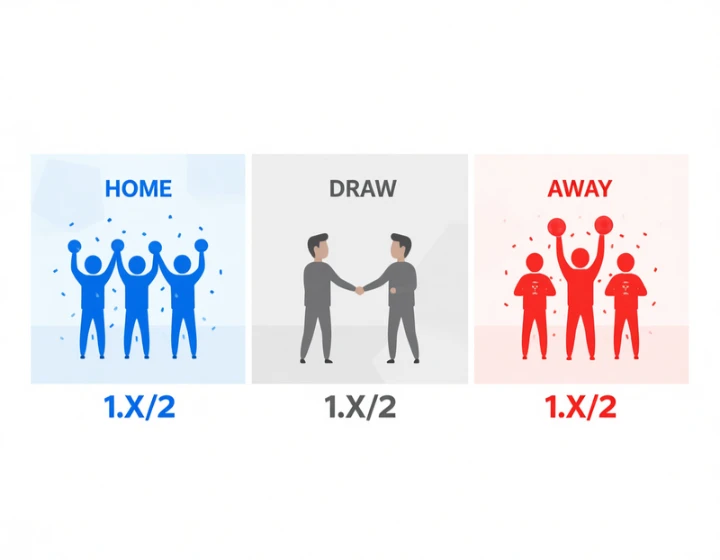
Let’s start with the obvious one. The match result market, also called 1X2 or three-way betting, asks you to predict whether the home team wins, the match draws, or the away team wins. It’s straightforward, which explains why it attracts the majority of betting volume. Unfortunately, straightforward markets are also where bookmakers are most careful with their pricing.
In the Carabao Cup specifically, match result betting requires extra attention to team selection. A Premier League team that’s been dominant in the league can become mediocre when fielding seven or eight changes. Meanwhile, their Championship opposition might only rotate two or three players because the cup represents a genuine opportunity. These dynamics aren’t always reflected accurately in pre-match odds.
I treat the draw option differently in cup matches than I do in league fixtures. Teams playing cup ties often approach them with “don’t lose” mentality rather than “must win” urgency, particularly when they’re evenly matched or rotation has leveled the playing field. This defensive mindset leads to more draws than you’d expect from league meetings between the same teams. The draw odds frequently offer value that’s overlooked.
The timing of your match result bets matters enormously in the Carabao Cup. Before team announcements, odds reflect expected lineups. Once actual team sheets emerge, odds can swing dramatically. If you’ve done proper research and predicted lineups accurately, you can secure excellent pre-announcement odds that look foolish in retrospect. Alternatively, if you prefer certainty, waiting for confirmed lineups eliminates guesswork but reduces available value.
Home advantage premiums built into match odds often exceed the actual home field benefit in early-round cup ties. A half-empty stadium on a Tuesday night doesn’t generate the same intimidation factor as a packed house on Saturday afternoon. Yet bookmakers apply similar home advantage adjustments, creating systematic value on away teams in these situations.
Double Chance: Reducing Risk, Reducing Returns
Double chance betting lets you cover two of the three possible outcomes in a single bet. You can back home win or draw, away win or draw, or either team to win. The odds are obviously lower than straight win bets, but your probability of winning increases significantly. This market makes sense in specific Carabao Cup contexts where uncertainty is unusually high.
When a big club is rotating heavily and facing motivated opposition, the result becomes genuinely unpredictable. You might believe the big club won’t lose, but you’re not confident they’ll win either. Backing them in a double chance market – combining their win with the draw – gives you cover against cagey 0-0 stalemates or last-minute equalisers that would sink a standard win bet.
I use double chance primarily for underdogs in matches where I think they’re competitive but not necessarily favorites. Backing a Championship team to avoid defeat against a rotated Premier League side often offers better value than picking outright winners. The draw becomes your safety net, and in knockout football where penalties can follow stalemate, avoiding defeat matters more than securing victory in normal time.
The mathematical relationship between standard match odds and double chance odds tells you what the bookmaker thinks about different outcomes. If the double chance odds seem too generous relative to the individual outcome odds, there might be value. Conversely, if they’re overly compressed, you’re better off taking positions in other markets.
One warning about double chance betting – it’s easy to convince yourself you’re being clever by reducing risk when actually you’re just accepting poor value. Sometimes you need to commit to a position rather than hedging. If your analysis says a team should win, back them to win. Don’t dilute your edge by adding unnecessary insurance.
Both Teams to Score: Exploiting Defensive Rotation
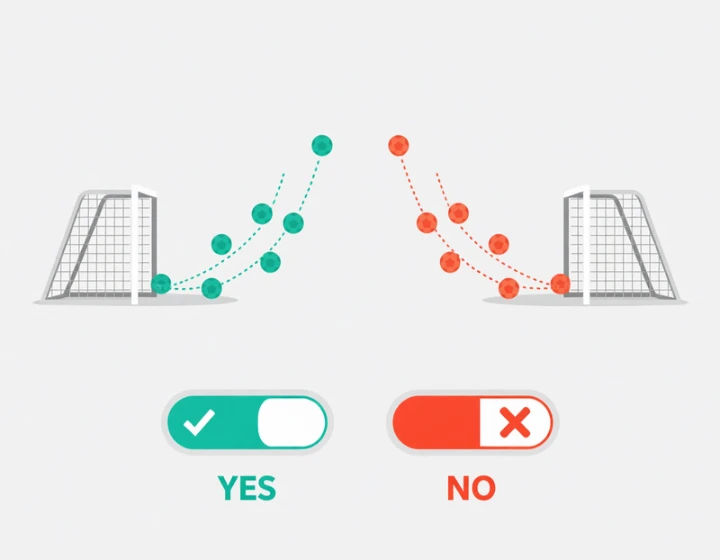
The BTTS market asks whether both teams will score at least one goal during the match. It’s beautifully simple – yes or no – and in Carabao Cup fixtures, it creates fascinating angles because rotation patterns affect attacks and defenses differently.
When top teams rotate heavily, they often keep some attacking quality on the pitch while completely overhauling their defense. Young center-backs who’ve barely played together get thrown in alongside a makeshift defensive midfielder. Suddenly a team that’s been watertight in the league becomes vulnerable. Even moderate opposition can find spaces and create chances. This defensive fragility while maintaining some attacking threat makes BTTS particularly interesting.
I look for specific rotation patterns that favor BTTS. When teams rest their regular fullbacks, width becomes harder to defend. When they change both center-backs, communication suffers. When the regular goalkeeper sits out, set-piece defending deteriorates. All these factors increase the likelihood of both teams scoring without requiring either to dominate.
The BTTS No option shouldn’t be overlooked either. When lower-league teams face vastly superior opposition, they sometimes adopt such defensive approaches that scoring becomes nearly impossible. Ten men behind the ball, time-wasting from minute one, no interest in attacking whatsoever. If the favorite also rotates heavily and lacks cutting edge, 1-0 or 2-0 wins become likely, making BTTS No valuable.
Weather conditions affect BTTS markets more than most realize. Heavy rain or strong winds in midweek cup fixtures can turn matches into scrappy affairs where neither team creates quality chances. The combination of poor conditions, rotated lineups, and low motivation can suppress scoring entirely, making unders and BTTS No correlate strongly.
Over/Under Goals: Predicting Total Output
Total goals markets ask whether the combined scoring will exceed or fall short of a specific line. The standard line is 2.5 goals, but bookmakers offer alternatives from 0.5 up to 5.5 or higher. Understanding how rotation affects scoring patterns is crucial for finding value in these markets.
Early rounds often produce goal-fests when quality gaps are massive. A Premier League team, even heavily rotated, facing League Two opposition can win 4-0 or 5-1. The technical superiority eventually tells, and lower-league teams tire after 60-70 minutes of intense defending. Backing over 3.5 or even 4.5 goals in these mismatches can offer value when the odds reflect more competitive matchups.
Conversely, when evenly matched teams from different divisions meet, under 2.5 goals becomes interesting. Neither side knows quite what to expect. Both managers set up cautiously. Players who rarely start together lack fluidity in attack. The result is often a cagey, low-scoring affair that bears no resemblance to what the same teams produce in their regular competitions.
The timing of goals matters for live betting on totals. Early goals typically lead to more goals – the losing team must push forward, spaces open, chances multiply. But late first goals often suppress totals as the leading team focuses on game management while the trailing team becomes increasingly desperate and careless. Understanding these dynamics helps you bet totals in-play more effectively than simply reacting to the current score.
Alternative goal lines offer better value than standard 2.5 in specific situations. When you’re confident about low scoring but not extremely low, under 3.5 at shorter odds provides a buffer. When you expect goals but not a deluge, over 1.5 creates a safer position. The key is matching your confidence level to appropriate lines rather than always defaulting to 2.5.
Asian Handicaps: Leveling the Playing Field
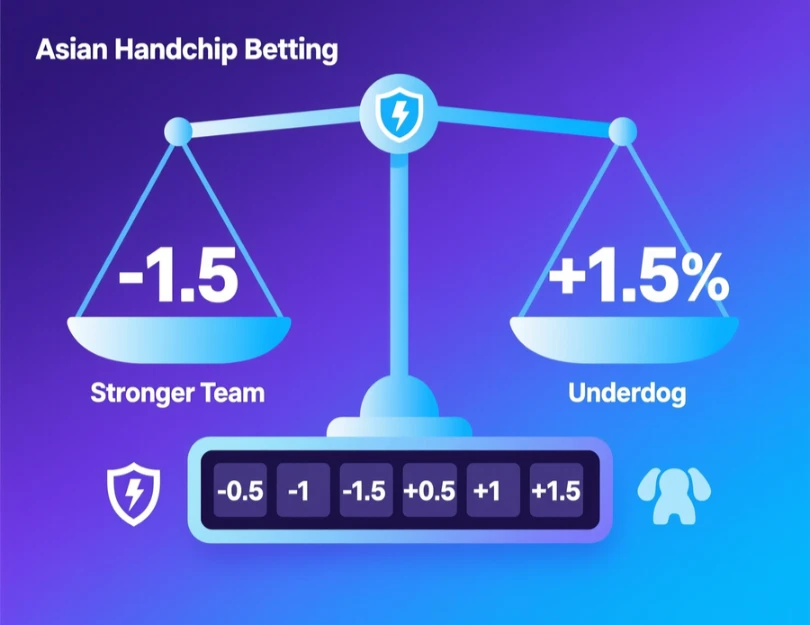
Asian handicaps eliminate the draw by giving one team a virtual head start or deficit. A -1.5 handicap means that team must win by two goals or more for your bet to win. A +1.5 handicap means that team can lose by one goal and your bet still wins. This market excels in Carabao Cup fixtures where quality gaps exist but might be narrower than odds suggest.
The beauty of Asian handicaps is their flexibility. Quarter handicaps like -0.25 or +1.75 split your stake across two positions, allowing partial wins and losses. This granularity lets you fine-tune positions based on exactly how you rate each team rather than forcing you into rigid win/lose/draw boxes.
In early cup rounds, I often find value backing big teams on hefty negative handicaps. The odds assume rotation will limit winning margins, but if a Premier League team takes even a half-strength side to a League Two ground, the quality gap usually tells eventually. Backing -2.5 or -3.5 handicaps at generous odds can work when motivation aligns with quality.
Positive handicaps on underdogs make sense when cup magic seems possible but unlikely. You think the underdog might sneak a draw or even pull off a shock, but you’re not confident enough to back them outright. Taking +1.5 or +2.5 provides a cushion that turns narrow defeats into winning bets while maintaining upside if the upset materializes.
The split handicap lines deserve special attention. A 0, +0.5 handicap means half your stake backs the underdog to win while half backs them to avoid defeat. If they draw, you get half your stake back plus half winnings. These positions reduce variance while maintaining reasonable returns, perfect for cup ties where anything can happen.
Goalscorer Markets: Individual Glory in Team Sport
Goalscorer betting adds individual player performance to your analysis. You can back players to score first, last, anytime, or multiple goals. In the Carabao Cup, where fringe players get opportunities and motivation varies wildly, these markets create unique angles.
Anytime goalscorer is the most popular option – your player just needs to score once at any point. In cup fixtures, look for players desperate to impress. The striker who’s been on the bench all season finally gets a start. The young prospect making his debut. The January signing trying to force his way into consideration. Motivation matters more than form in these spots.
First goalscorer offers longer odds but requires precise prediction. Set-piece takers gain value here – penalties, free-kicks, corners all create first goal opportunities. In nervy cup ties, the first goal often comes from a dead ball situation rather than open play. Identifying designated penalty takers who wouldn’t normally start becomes profitable.
I pay particular attention to players facing their former clubs in cup competitions. The emotional edge, the desire to prove a point, the intimate knowledge of defensive weaknesses – all of these factors increase scoring probability. The odds rarely account for these psychological edges adequately.
Multiple goalscorer markets – backing a player to score two or more – work best in severe mismatches. When Manchester City’s third-choice striker faces League Two defenders, the quality gap can lead to hat-tricks. The odds on established players scoring multiple goals against lower-league opposition often exceed the true probability.
One trap to avoid: backing regular starters who might not play full matches. Managers protecting key players often substitute them after 60-70 minutes regardless of score. Your prolific striker might be withdrawn just as tired defenders create opportunities. Always factor in likely playing time, not just scoring ability.
Qualification Markets: Who Advances Regardless
Unlike league matches, cup ties must produce a winner. Qualification markets focus on who progresses to the next round rather than the match result after 90 minutes. This includes potential extra time and penalties, creating different dynamics than standard match betting.
The value in qualification markets emerges when you think a match will be close but one team has clear advantages if it extends beyond 90 minutes. Superior fitness, stronger bench, better penalty takers, experienced goalkeeper – all these factors matter more in qualification markets than match result betting.
I’ve found particular value backing underdogs to qualify when facing teams with packed schedules. The favorite might be content to cruise through 90 minutes, expecting to win in extra time if needed. But cup competitions create pressure, tired legs cramp, and suddenly you’re in a penalty shootout where anything can happen. The odds on underdog qualification often don’t fully price in this scenario.
The mental side of penalties favors certain teams systematically. Clubs with recent shootout success carry confidence. Teams with nothing to lose play more freely than favorites feeling pressure. International players accustomed to knockout football handle the pressure better. These edges compound in qualification markets where penalties become realistic outcomes.
One strategic approach is comparing match result odds to qualification odds. If the gap seems too wide, there might be value. Bookmakers sometimes price qualification markets lazily, essentially copying match odds with slight adjustments. When you identify matches likely to need extra time or penalties, the qualification market offers better value than match result betting.
Find the specific edges in our list of best betting markets.
Corners and Cards: The Forgotten Markets
Corners markets ask whether the total corners will be over or under a certain line, or which team will win the corner count. In matches where one team dominates possession but faces organized defending, corners pile up without necessarily converting to goals. Backing overs on corners when a possession-heavy team faces defensive opposition can offer value even if you’re not confident about the match result.
I’ve found corner betting particularly profitable when Premier League teams field strong sides against lower-league opposition in later cup rounds. The quality gap means sustained pressure, but the underdog parks the bus. Corner after corner gets conceded without the defense breaking, and the over corners line hits easily regardless of final score.
Cards markets focus on bookings and sendings off. Under cards can offer value in Carabao Cup fixtures where rotation means young players trying to impress and referees aware they’re officiating players’ potential breakthrough moments. The atmosphere is less intense than league matches, tackles are more cautious, and bookings decrease accordingly.
The over cards angle works when you’ve got fierce local rivalries or matches where previous encounters have been heated. Derby games maintain their edge even in cup competitions, and cards follow. Similarly, when desperate teams face relegation rivals or must-win scenarios, the intensity rises and cards accumulate.
Combination Bets and Request-a-Bets: Creating Custom Markets
Modern bookmakers offer bet builders that let you combine multiple selections from the same match into one bet. While these tools are often designed to extract money from casual punters who love parlays, intelligent use can occasionally create value, particularly in Carabao Cup fixtures with predictable patterns.
The key is identifying correlated outcomes that bookmakers price as independent. Under goals combined with under cards makes sense in rotated fixtures where caution prevails. Both outcomes stem from the same underlying cause – young players playing conservatively – yet bet builders often price them as unrelated events.
Similarly, combining a team to qualify with under goals works in matches you expect to be tight and potentially reach penalties. You’re betting on defensive solidity leading to both low scoring and progression, possibly through shootouts. The correlation works in your favor even though the individual odds compress.
The mistake is combining negatively correlated outcomes for longer odds. Backing a team to win comfortably while also backing under goals contradicts itself. Big wins require multiple goals. If you’re chasing enhanced odds by combining incompatible predictions, you’re not finding value – you’re donating money to bookmakers.
I use combination bets sparingly and only when I’ve identified genuine correlation that improves my probability of winning beyond what the combined odds suggest. Most often, keeping selections separate provides better value even if individual bets feel less exciting than one massive accumulator.
Outright Tournament Betting: The Long Game

Betting on which team will win the Carabao Cup outright is available from the start of the competition. This market moves dramatically as rounds progress and big clubs either commit resources or crash out. Understanding how to time these bets and which teams represent value at different stages requires strategic thinking beyond individual match analysis.
Early-season outright betting generally favors big clubs at short odds. Manchester City might be 2.50 to win the tournament, Liverpool 4.00, Arsenal 5.00. These odds assume they’ll take the competition seriously eventually, even if early rounds see rotation. The value often lies in mid-tier Premier League teams at longer odds who might prioritize the cup as their best trophy opportunity.
As big clubs get eliminated or draw difficult matchups, outright odds shift rapidly. A team like Newcastle or Aston Villa might start at 20.00 but find themselves at 6.00 if they reach the quarter-finals and the draw opens favorably. Timing your outright bets to capture value after these movements requires patience but can yield significant returns.
I treat outright betting as portfolio building rather than single bets. Backing three or four teams at different stages, taking advantage of odds movements and bracket positioning, spreads risk while maintaining upside. If one of your selections reaches the final, you can even hedge by betting their opponent to guarantee profit regardless of outcome.
The key mistake in outright betting is backing big clubs at prohibitively short odds just because they’re likely winners. Manchester City at 1.80 to win the Carabao Cup offers terrible value even if they’re genuinely the most likely winner. Finding teams at 8.00 to 15.00 whose actual chances exceed their implied probability creates much better risk-reward profiles.
Developing Your Market Selection Strategy
With so many betting markets available, the natural question becomes which ones to focus on. The answer isn’t universal – it depends on your analytical strengths, available time for research, and temperament toward variance.
If you’re strong at predicting team selection and lineup impacts, goals markets and result betting reward that skill directly. If you’re better at reading tactical matchups than predicting specific outcomes, corner markets or Asian handicaps might suit you better. The key is honest self-assessment about where your edge actually exists.
I recommend starting with fewer markets and learning them deeply rather than spreading attention across everything. Master total goals betting in Carabao Cup matches before adding corners and cards. Understand match result nuances before attempting complex combination bets. Depth beats breadth when building expertise.
Record-keeping reveals which markets you’re actually profitable in versus which ones you just enjoy betting on. Track every bet with market type, odds, reasoning, and outcome. After 50 or 100 bets, patterns emerge. You’ll discover you’re consistently finding value in certain markets while repeatedly making mistakes in others. Double down on your strengths and abandon your weaknesses.
Different markets suit different risk tolerances too. Conservative bettors might prefer double chance or Asian handicaps that reduce variance. Aggressive bettors might chase correct scores or long-shot goalscorer bets. Neither approach is inherently superior – they just require different bankroll management and psychological makeup.
The Carabao Cup’s unique characteristics mean certain markets offer systematically better value than others. Goals markets benefit from rotation unpredictability that bookmakers struggle to price. Qualification markets capture penalty shootout optionality that creates edges. Match results in high-profile fixtures tend to be efficiently priced but early-round mismatches create opportunities. Learning which market types reward Carabao Cup analysis specifically accelerates your learning curve.
Ultimately, market selection is about matching opportunities with tools. When you spot a situation where heavy rotation will suppress scoring, you need to know that total goals unders are how you express that conviction. When you identify a team likely to progress through penalties, qualification markets are your vehicle. The more markets you understand, the more opportunities you can exploit. But understanding them superficially helps nobody – better to truly master three markets than dabble poorly in fifteen.
Explore all wagering options on our EFL betting site.
