

The Carabao Cup often gets written off as a secondary competition, somewhere between a training ground experiment and a genuine trophy hunt. But here’s the thing – while most punters are busy obsessing over Premier League weekends and Champions League nights, there’s serious value hiding in these midweek cup ties. I’ve spent years watching bookmakers misprice these matches, and honestly, it’s become one of my favorite competitions to bet on.
Look, I’m not going to pretend I’ve cracked some magical code that guarantees profits. Anyone promising you that is selling snake oil. What I can offer, though, are strategies that have consistently helped me find edges in Carabao Cup markets. These aren’t complicated mathematical models or insider secrets – they’re practical approaches based on understanding how this competition actually works and where bookies tend to get it wrong.
The beauty of the Carabao Cup lies in its unpredictability, but that unpredictability isn’t random. It follows patterns. Managers rotate squads in predictable ways. Big clubs stumble at predictable stages. Form from league matches matters less than you’d think, and when you start seeing these patterns, the value starts appearing everywhere.
Understanding What Makes Carabao Cup Betting Different
Before diving into specific strategies, we need to acknowledge that Carabao Cup betting isn’t just Premier League betting with different team sheets. The entire ecosystem changes. A team that’s been rock-solid defensively in the league might field a back four that’s never played together. A striker who can’t buy a goal on Saturdays suddenly gets 90 minutes and looks like prime Ronaldo against tired Championship defenders.
The motivation levels shift dramatically too. For Manchester City or Liverpool, this competition ranks somewhere between pre-season friendlies and the Community Shield until they reach the semi-finals. For a club like Middlesbrough or Preston, it might represent their best shot at silverware in decades. That psychological gap creates opportunities that simply don’t exist in league football.
Bookmakers know this, of course. They’re not stupid. But here’s where they struggle – they’ve got odds compilers who are brilliant at pricing Premier League matches because they’ve got mountains of data and clear patterns to work with. When you throw in mass rotation, unfamiliar matchups, and wildly varying motivations, their models start creaking. The odds might look reasonable on the surface, but dig deeper and you’ll find they’re often way off.
Another crucial difference is the format itself. Two-legged semi-finals create unique dynamics around away goals and tactical approaches. Single-elimination matches mean one bad defensive moment can end a team’s entire campaign. There’s no margin for error, no chance to make up for a poor performance next weekend. This pressure affects different teams in different ways, and understanding these psychological factors can be just as valuable as analyzing the stats.
Strategy One: The Squad Rotation Analysis
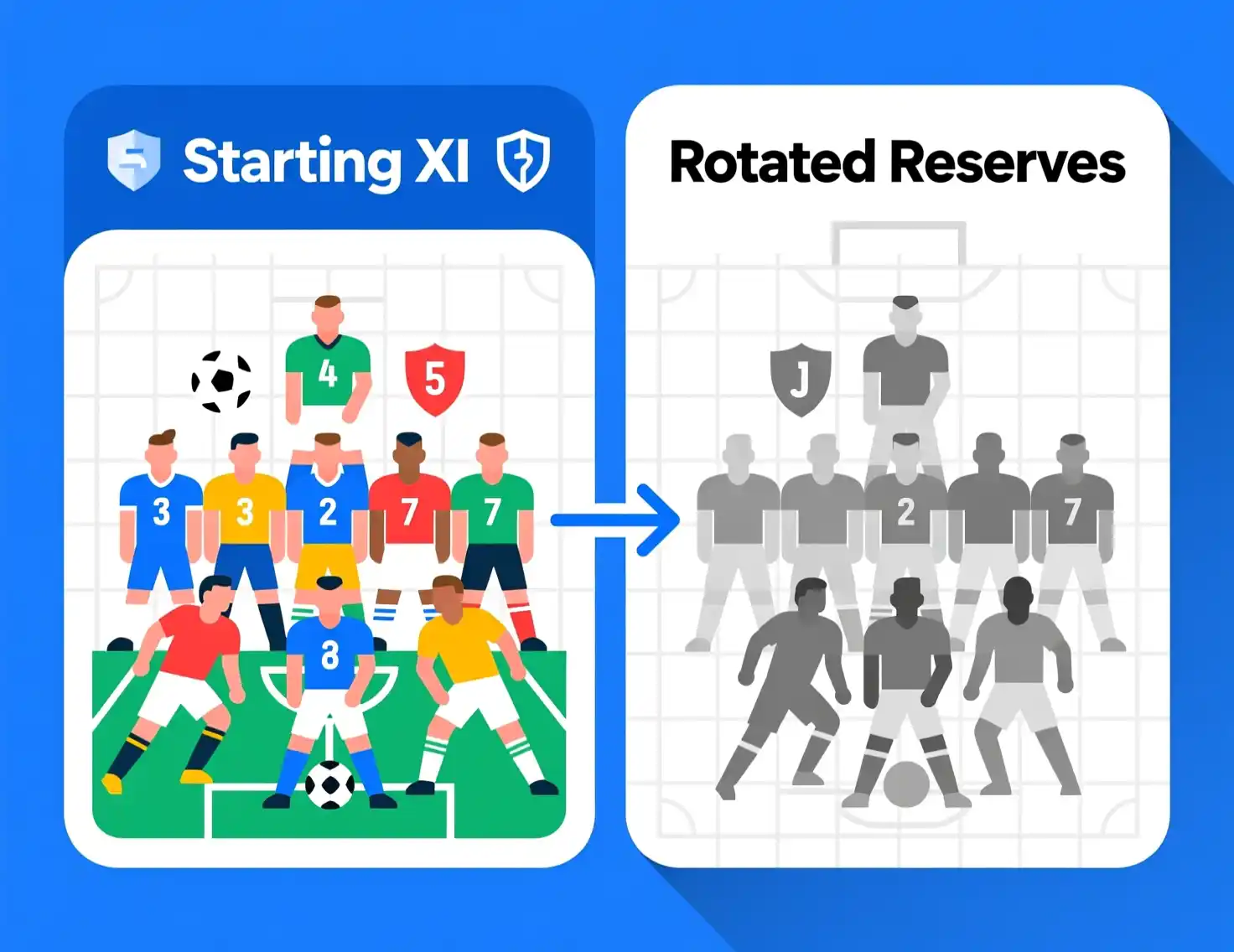
This is where most successful Carabao Cup betting starts. You need to become a detective, piecing together which players will actually start based on fixture congestion, injury lists, and managerial tendencies. It sounds tedious, and honestly, it can be. But this research separates winning bettors from losing ones.
Start by tracking each manager’s rotation patterns from previous rounds. Some managers, like Pep Guardiola, rotate so heavily in early rounds that the starting XI is virtually unrecognizable. Others, particularly those managing teams where the Carabao Cup represents a genuine opportunity for silverware, keep their strongest players involved deeper into the competition.
The fixture schedule tells you everything. If Liverpool have a Carabao Cup fourth-round tie on Wednesday and then face Manchester United on Sunday, you can bet Jurgen Klopp isn’t playing Salah, Van Dijk, or any other key player. He’ll save them for the league match. But if that Sunday game is against a lower-table side, suddenly the rotation might be less severe. Context matters enormously.
Press conferences become essential viewing or reading material. Managers often telegraph their intentions without explicitly stating them. When a manager says things like “we’ll see who’s fresh” or “young players will get opportunities,” that’s code for massive rotation. When they talk about respecting the competition and going for silverware, expect stronger lineups.
Here’s a practical example from last season. Newcastle had a fourth-round tie against Chelsea on a Wednesday, then faced Brighton in the league on Saturday. Eddie Howe had been rotating heavily in cup competitions all season, and he was in good form in the league. The bookies still had Newcastle as favorites against a Chelsea side that was admittedly struggling. But when the teams were announced, Newcastle fielded essentially a reserve side while Chelsea, desperate for any success, went much stronger. Newcastle lost, and anyone who’d done their homework saw it coming.
The real skill is finding discrepancies between the implied lineup strength and the odds being offered. Sometimes bookies price matches assuming more rotation than actually happens. Other times, they don’t account for how weak a rotated side will actually be. Your job is to spot these gaps.
Strategy Two: Exploiting the Home Advantage Myth
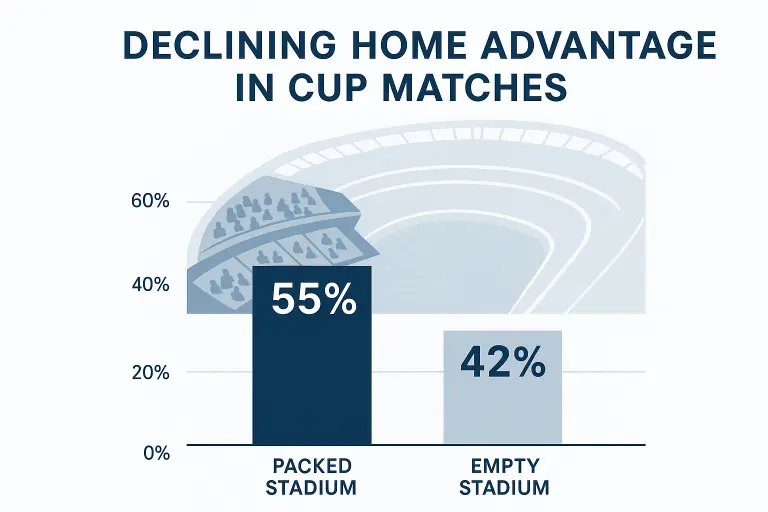
Home advantage exists in football, obviously. But in the Carabao Cup, its value shifts dramatically and bookmakers often price it incorrectly. A half-empty stadium on a cold Tuesday night in October doesn’t generate the same atmospheric pressure as a packed house on Saturday afternoon. Yet the odds often include a similar home advantage premium.
Lower-league teams playing at home against Premier League opposition get enormous odds swings based on the home advantage assumption. The bookies load the home team’s price based on their statistical models, but those models are built on league matches with full stadiums and supporters who’ve paid to watch their team. In reality, a Carabao Cup third-round tie might draw 8,000 fans to a stadium that holds 30,000. The intimidation factor vanishes.
I’ve found value consistently by betting against inflated home favorites in early rounds, particularly when they’re lower-league sides facing Premier League opposition. Yes, the Premier League team will rotate, but the gulf in quality is still massive. The home team’s odds get shortened beyond what their actual chance of winning justifies.
This doesn’t mean always backing the away side. It means understanding when home advantage is genuine and when it’s an illusion. When two lower-league teams meet in the Carabao Cup, home advantage can still matter because both teams are treating it seriously and the quality gap is minimal. But when the contexts are mismatched – a serious home side against a disinterested visitor or vice versa – the traditional home advantage calculations break down.
Strategy Three: The Motivation Arbitrage
This strategy revolves around identifying mismatches in how seriously teams approach the competition. Bookmakers price matches based primarily on league form and squad quality, but they often undervalue the massive impact of motivation in cup ties.
Consider a mid-table Championship side facing a Premier League team battling relegation. The Championship side sees the Carabao Cup as their route to Wembley and potential European qualification. The Premier League side sees it as a dangerous distraction from their survival fight. The odds might favor the Premier League team based on overall quality, but the motivation gap can completely flip the actual probabilities.
I track each team’s situation carefully. Are they in a relegation battle? Fighting for European places? Going through a crisis that makes a cup run valuable for morale? Or are they comfortable mid-table with nothing to play for except glory? These factors matter enormously in the Carabao Cup but get under-weighted by bookmaker algorithms.
Historical data backs this up. Teams in the Premier League relegation zone have a terrible record in the Carabao Cup, far worse than their relative quality would suggest. They almost always prioritize league survival, field weakened teams, and approach matches with one eye on the weekend. Meanwhile, ambitious Championship sides regularly upset their supposed superiors because they’re going full-strength and treating it like a cup final.
The key is identifying these motivation mismatches before the market does. By the time team news comes out and confirms heavy rotation from the uninterested side, the value has usually gone. You need to predict it based on context, not wait for confirmation.
Strategy Four: Early Round Dog Backing
The early rounds of the Carabao Cup produce more genuine upsets than almost any other competition, yet the odds often don’t reflect this reality. When League Two Rochdale gets drawn at home against a Premier League side, they might be 10/1 or longer. But their actual chance of winning is often much higher than those odds suggest.
Several factors combine to create these upset opportunities. First, the Premier League side almost certainly rotates heavily, sometimes fielding a team with eight or nine changes. Second, the lower-league side treats it like their biggest match of the season, with maximum motivation and preparation. Third, the quality gap between a rotated Premier League XI and a full-strength League Two side is smaller than people think.
I don’t blindly back every underdog – that’s a recipe for bankruptcy. Instead, I look for specific conditions: home advantage for the underdog, likely heavy rotation from the favorite, good recent form for the underdog, and ideally some cup pedigree or history of causing upsets. When these factors align, the big odds available often represent genuine value.
The psychology matters too. Young Premier League players making rare starts often feel pressure to impress, leading to over-complication and individual play rather than team cohesion. Meanwhile, the lower-league side plays with freedom, knowing nobody expects them to win. This psychological dynamic has produced countless cup shocks over the years.
Improve your precision by using Asian handicap betting for cup ties.
Strategy Five: The Under Goals Goldmine
Heavy rotation leads to disjointed performances, and disjointed performances lead to low-scoring matches. It’s a simple equation that bookmakers consistently undervalue in the Carabao Cup. The total goals markets often mirror league prices despite completely different circumstances.
When both teams make six or seven changes, you’re essentially watching two unfamiliar XIs trying to find rhythm against each other. The fluid passing moves and automated patterns you see in league matches disappear. Players who rarely start together don’t know each other’s movements. Attacking cohesion suffers far more than defensive organization in these circumstances.
I particularly target early-round matches between two Premier League teams who both rotate heavily. Something like Brighton versus Bournemouth in the third round, where both managers rest key players and field essentially reserve sides. These matches regularly end 0-0 or 1-0, yet the bookies price them similar to league encounters between the same teams.

The statistics support this approach. Matches with six or more changes per side average significantly fewer goals than matches with fewer rotations. Yet the total goals lines don’t drop proportionally. That’s your edge.
There’s a secondary angle here too – first-half unders. Rotated sides often take 20-30 minutes to find any rhythm. The first half becomes a feeling-out process, particularly cagey and low on chances. The first-half under 0.5 or under 1.5 goals markets can offer tremendous value in these scenarios.
Be careful with this strategy when one team rotates heavily and the other doesn’t. The quality gap can lead to goals, even if they’re one-sided. This works best when rotation is symmetrical and both teams are feeling their way through with unfamiliar lineups.
Strategy Six: Late-Stage Big Team Backing

This might seem counterintuitive given everything I’ve said about rotation, but bear with me. Once big clubs reach the semi-finals or finals, their approach changes completely. Suddenly the trophy is in sight. The manager who’s been rotating all competition long starts playing his best XI. The team that treated earlier rounds like training exercises switches into serious mode.
The odds often don’t adjust quickly enough. Bookmakers and bettors alike have spent the whole competition watching these big clubs field weakened teams. There’s a perception that they don’t care about the Carabao Cup, that they’ll continue rotating, that smaller teams have a genuine chance. Then the semi-final teamsheets come out and it’s full-strength Manchester City or Liverpool, and the game’s over before it starts.
I look for opportunities to back big clubs at the semi-final stage, particularly when they’re facing opponents who’ve overachieved to get there. A Championship side that’s knocked out a couple of Premier League teams with strong performances might get backed heavily by sentiment, but when they face a fully-motivated City or Arsenal side in a semi-final, reality hits hard.
The final is slightly different because both teams will likely go strong, but even there, backing the bigger club often makes sense. One-off cup finals are notoriously difficult to predict based on form, but quality usually tells in the end. The odds on favorites in finals are often generous because people love betting on underdogs in showpiece occasions.
This strategy requires patience. You’re potentially watching an entire competition unfold, waiting for the semi-final stage to arrive before placing significant bets. But the value appears reliably at that stage because market perception lags behind reality. Everyone remembers the rotated sides from earlier rounds and assumes it’ll continue, even when all the incentives have shifted.
Strategy Seven: The Combination Accumulator Approach
Accumulators get a bad reputation among serious bettors, and mostly for good reason. The more selections you add, the more likely something goes wrong. But in the Carabao Cup, carefully constructed accumulators can work because you’re not betting on match outcomes – you’re betting on predictable patterns.
Here’s how I approach it: I build accumulators around rotation certainties rather than results. For example, in a midweek round of third-round matches, I might combine several “under goals” selections for matches where both teams will definitely rotate heavily. Or I might combine “both teams to score” in matches where defensive rotation is guaranteed to create opportunities.
The key word is “carefully.” I’m not throwing together six random picks and hoping for the best. I’m identifying multiple matches where a specific pattern is highly likely to occur, then combining those patterns. Each individual selection might only offer 1.60 or 1.80 odds, but when you combine three or four of them thoughtfully, you get decent returns while maintaining reasonable probability.
Another accumulator angle is combining heavy favorites in matches where the quality gap is enormous and rotation won’t matter. Early-round matches where Premier League top-six teams play League One or League Two opposition can be combined effectively. Yes, they’ll rotate, but the talent gap is still massive enough that they should win comfortably.
I also use smaller “double” or “treble” accumulators combining different bet types from the same match when rotation patterns are clear. For instance, if I know both teams will rotate heavily, I might combine under 2.5 goals with under 4.5 cards. Rotated sides with young players trying to impress often result in fewer cards because everyone’s playing cautiously. Combining these correlated outcomes can boost returns while the correlation actually reduces risk rather than increasing it.
The mistake most people make with accumulators is treating each selection as independent when they’re not. In the Carabao Cup, you can find genuinely independent selections because rotation patterns affect different matches in predictable but separate ways. That’s where this approach gains its edge.

Conclusion: Implementing Your Cup Betting Strategy
None of these strategies work in isolation every single time. Football’s too chaotic for guaranteed profits, and anyone claiming otherwise is lying. What these approaches do is tilt the odds back in your favor over the long term. Some bets will lose – sometimes painfully. But if you’re consistently finding value and betting where bookmakers are mispricing markets, you’ll come out ahead over a full season.
The Carabao Cup rewards preparation more than almost any other competition. The teams that succeed are usually the ones that take it seriously and manage their squads intelligently. The bettors who succeed are the ones doing the same thing – taking it seriously and managing their approach intelligently.
Start by tracking one or two teams closely. Learn their rotation patterns inside out. Understand when they prioritize the cup and when they don’t. Once you’ve mastered reading one team’s approach, expand to others. Build a database of managerial tendencies, squad depths, and historical patterns. It sounds like work because it is work, but that work translates directly into profit.
Timing matters too. The biggest value often appears just before teams are announced, when you’ve done your research and have a good idea of the lineups but the bookies are still pricing based on best-case scenarios. Once teams are confirmed, odds adjust rapidly. Do your homework, form your opinions, and bet with conviction when you spot discrepancies.
Remember that variance exists. You might nail your analysis perfectly and still lose because a teenager having the game of his life scored a worldie from 30 yards. That’s football. What matters is whether you’re making positive expected value decisions repeatedly. The results take care of themselves over time.
The Carabao Cup isn’t the most glamorous competition in football, but for bettors who understand its quirks, it’s consistently profitable. While everyone else is obsessing over Premier League weekends, you can be quietly finding value in midweek cup ties that bookmakers struggle to price accurately. That’s not a bad way to spend your Tuesday and Wednesday evenings.
Master the knockout stages using our League Cup portal.
