Carabao Cup Betting: The Ultimate Guide
 Available in US
The Carabao Cup isn't prestigious. It never will be. Most clubs treat it like a reserve team training exercise until the semi-finals. And that's exactly why sharp bettors make a killing on it every single year.
Table of Contents
Introduction to Carabao Cup Betting
While everyone's focused on the Premier League and Champions League, the Carabao Cup quietly offers some of the best value betting opportunities in English football. Squad rotations are predictable. Motivation levels vary wildly between rounds. Big clubs field teenagers against lower-league sides fighting for their lives. It's chaos, and chaos creates value for those who understand the patterns.
This guide breaks down everything you need to know about betting on the Carabao Cup, from understanding rotation patterns to exploiting live betting markets when lineups drop. Whether you're new to cup betting or looking to refine your approach, you'll learn the frameworks that separate profitable bettors from the recreational punters who get crushed by variance.
We'll cover the unique dynamics of early rounds versus later stages, how to read team news like a professional, which markets offer genuine edge, and the bankroll management principles that ensure you're still standing when the inevitable upsets hit. This isn't about picking winners—it's about finding value in a competition most people don't understand.
Key Insight: The Carabao Cup's low priority status for big clubs creates massive inefficiencies in betting markets. Understanding rotation patterns and motivation levels is more important than form or statistics.
Understanding the Carabao Cup for Betting
The Carabao Cup operates on different logic than league football. Premier League managers see it as a chance to rest stars and blood youngsters until the later rounds. Championship clubs view it as either a distraction from promotion battles or a genuine shot at silverware. League One and Two sides treat early rounds as potential money-spinners that could fund their entire season. These competing priorities create exploitable angles.
Timing matters enormously. Early rounds in August and September clash with European qualifiers and the start of league campaigns. Clubs juggling multiple competitions rotate heavily. By the quarter-finals in December, the dynamic shifts—suddenly it's only three games from Wembley, and even big clubs start taking it seriously. Understanding this progression from afterthought to priority is fundamental to successful Carabao Cup betting.
Home advantage works differently too. A League Two side hosting Manchester United reserves gets a massive leveling effect. Their regular starting eleven against a disjointed collection of youth players and squad members creates genuine upset potential. The atmosphere, pitch conditions, and unfamiliarity all favor the home underdog in ways that wouldn't apply if United fielded their strongest side.
The two-legged semi-final format, unique among English cup competitions, creates its own betting dynamics. The first leg often sees cautious approaches, especially from the home side who doesn't want to concede away goals (even though away goals don't count extra in the Carabao Cup, managers still think about them). Second legs can become either processions or desperate scrambles depending on the first-leg margin.
Carabao Cup Betting Markets Explained
Match result markets in the Carabao Cup require careful attention to the competition rules. Unlike league matches, these games must produce a winner on the night. If it's level after ninety minutes, you get thirty minutes of extra time, then penalties. This fundamentally changes the value proposition of backing draws or laying favorites.
The "to qualify" market is often sharper than match result because it accounts for extra time and penalties. When Manchester City's reserves face a Championship side, City might be 1.40 to win in ninety minutes but 1.25 to qualify. That's because even disjointed City reserves probably beat Rotherham on penalties. Understanding this distinction prevents costly mistakes.
Both teams to score (BTTS) markets offer excellent value in early rounds when defensive organization suffers from rotation. Reserve defenders who haven't played together struggle with communication and positioning. Combined with motivated lower-league attackers, you get more goals than the odds suggest. As the tournament progresses and teams field stronger lineups, this edge diminishes.
Total goals markets often misprice early round matches. Bookmakers base lines on team's league scoring rates, but those statistics assume first-choice players. When both teams make eight changes, historical data becomes nearly worthless. Focus on matches where one team fields reserves against a lower-league side's first eleven—these often sail over conservative totals.
Player prop markets are goldmines if you track rotation patterns. When you know Mohamed Salah won't start but will likely come on as a substitute if Liverpool struggle, betting him to score anytime at inflated odds makes sense. Young players desperate to impress often shoot more than usual, making their shot totals valuable.
Outright winner markets should be avoided until after the third round draw. Too many variables exist: draw luck, rotation policies, fixture congestion. Once you reach the quarter-finals with eight teams left, assessing each team's likely path and commitment level becomes possible. Even then, only back teams at odds that account for rotation uncertainty.
Interactive tool
Ninety Minutes vs To Qualify, and Accumulator Reality Check
Price the qualification market using the competition's real rules on extra time, then check whether an accumulator example actually holds together.
Fair price to qualify
-
-
Win in 90, fair price
-
90-minute draw chance
-
Qualify chance
-
Which stage is this
The same match, both stages compared
The rule this tool gets right: since the 2018-19 season the EFL has run every round from the first up to the quarter-finals straight to penalties if level after ninety minutes, with no extra time at all. Extra time only returns for the second leg of the semi-final and for the final itself. A guide that describes extra time as the universal rule is describing the exception as if it were the norm, for the two matches a season it actually applies to.
What this accumulator actually pays
-
-
Implied multiple
-
Is this really a favourite price
-
Break-even price for singles
-
Related singles: profit or loss by number of winners
Why "favourites" and "forty times your stake" cannot both be true: a genuine favourite is priced under evens, typically somewhere around 1.20 to 1.60 decimal. Four legs at those prices return between two and seven times the stake, nowhere near the forty times needed to turn five pounds into two hundred. A payout that large across only four legs means the average price per leg has to sit well above evens, which is simply a different bet than the one being described.
7 Proven Carabao Cup Betting Strategies
Strategy One: Early Round Chaos Theory

The first three rounds of the Carabao Cup are where fortunes are made and lost. Premier League clubs routinely field eleven changes from their weekend lineups. You're not betting on Manchester United versus Rochdale; you're betting on Manchester United's under-23s plus a few fringe players against a motivated League One side fielding their strongest eleven.
Track pre-season friendlies religiously. When big clubs play their youth teams in July friendlies, note which combinations work and which look disjointed. These same players often start early Carabao Cup matches. If you saw Chelsea's reserves struggle against a Championship side in pre-season, that information becomes valuable when they face similar opposition in August.
Lower league home teams offer exceptional value in early rounds. The prices often don't account for the leveling effect of rotation. When Crawley Town hosts Fulham, the market might price Crawley at 5.00 to win in ninety minutes. But if Fulham makes ten changes and Crawley fields their best eleven, those odds should be closer to 3.00. This systematic mispricing occurs because casual bettors see "Premier League versus League Two" without considering lineups.
Strategy Two: The Squad Rotation Oracle
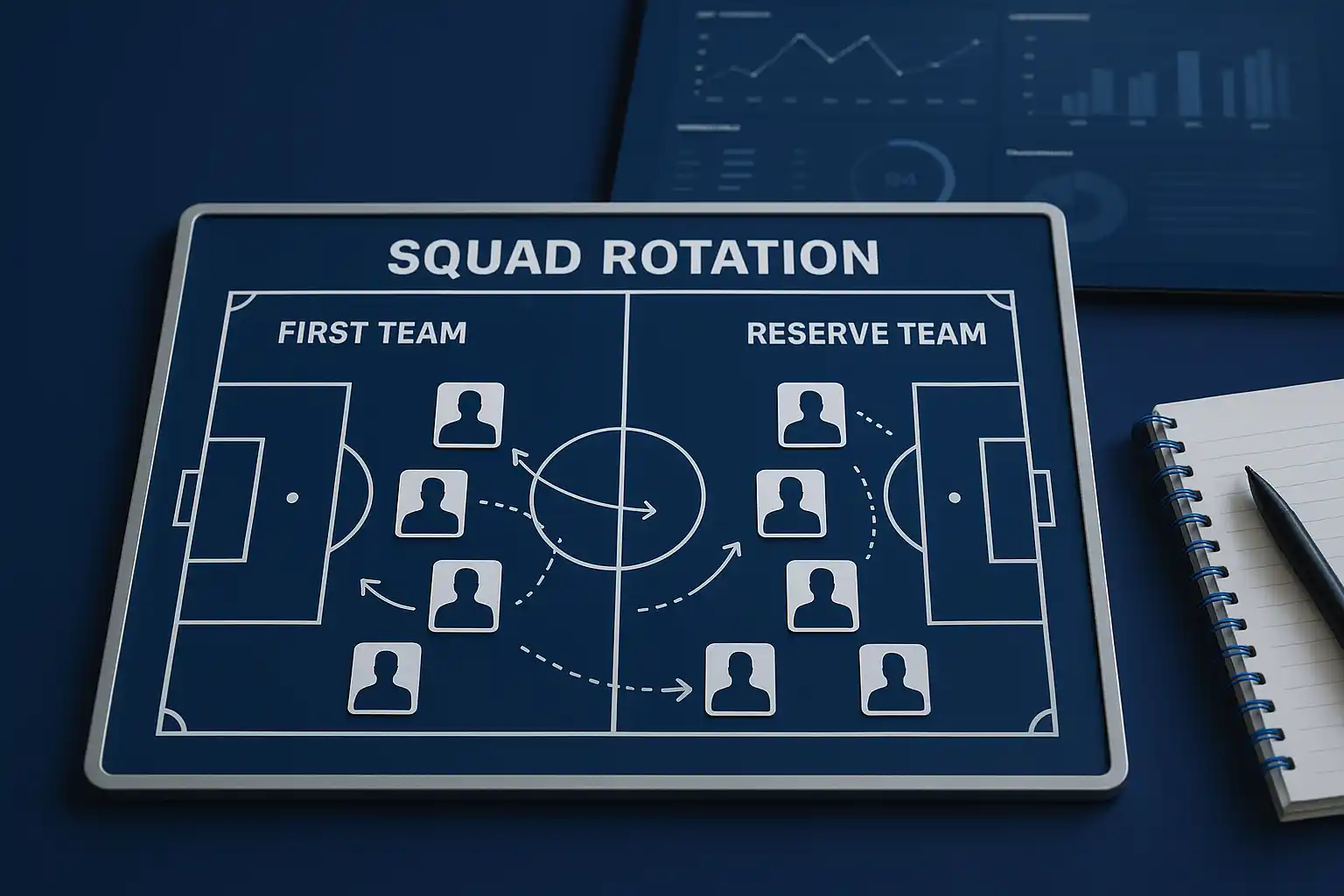
Successful Carabao Cup betting requires becoming a rotation expert for specific managers. Some rotate heavily regardless of opposition. Others gradually increase the quality as rounds progress. A few treat every game seriously until elimination. Knowing these tendencies before lineups are announced gives you a massive edge.
Create a database tracking each manager's rotation patterns. Note how many changes they make in early rounds versus later rounds. Track whether they rotate more heavily with European fixtures that week. Some managers always play strong teams at home but rotate away. Others do the opposite. These patterns repeat season after season.
Fixture congestion predicts rotation better than any other factor. When Liverpool plays Sunday-Tuesday-Saturday with the Carabao Cup match sandwiched between Premier League fixtures, expect eleven changes. But if they have a full week before and after? You might see five or six first-team players starting. The betting markets don't adjust enough for these scheduling dynamics.
Youth team form matters more than most bettors realize. Manchester City's EDS (Elite Development Squad) might be flying in Premier League 2, winning every match 4-0. When those same players start a Carabao Cup tie, the market prices them based on City's reputation without considering these players' actual current form. This creates value both backing and laying depending on youth team performance.
Strategy Three: The Team News Gold Rush
The hour between lineup announcement and kickoff is where sharp Carabao Cup bettors feast. Most recreational punters bet before team news or don't react quickly enough when lineups drop. This creates a window where odds don't reflect actual team strength.
Set up notifications for official team Twitter accounts during Carabao Cup gameweeks. Lineups usually drop sixty to seventy-five minutes before kickoff. Have your betting accounts funded and ready. When you see Leicester City has made nine changes while their Championship opponents have named their strongest eleven, you have minutes to act before the market adjusts.
Pre-match press conferences offer clues for those paying attention. When Jurgen Klopp mentions "giving opportunities to players who need minutes," that's code for wholesale changes. When he talks about "maintaining momentum" or "respecting the competition," expect a stronger lineup. These verbal tells are consistent once you learn each manager's patterns.
In-play markets often offer better value than pre-match once lineups are known. If Arsenal fields their C-team against a League One side, the prematch odds might have Arsenal at 1.50. Once the market sees the lineup, those odds drift to 2.00. But the in-play market might still price Arsenal at 1.70 at kickoff because liquidity is lower and adjustment slower. This discrepancy is exploitable.
Strategy Four: Live Betting Mastery
Carabao Cup matches offer unique live betting opportunities because quality can shift dramatically through substitutions. When Manchester City brings on De Bruyne and Haaland after sixty minutes in a 0-0 game, the entire match dynamics change. The live odds don't always adjust quickly enough to these seismic shifts.
Watch for motivation shifts during matches. If a Premier League team goes 1-0 down to lower-league opposition, their entire approach changes. Suddenly the manager realizes elimination would be embarrassing. The instructions become urgent. First-team players warm up. These moments create value—back the favorite after they concede but before they equalize.
Extra time betting in the Carabao Cup is wildly profitable if you understand fitness dynamics. A League Two side that's given everything for ninety minutes against Premier League reserves often collapses in extra time. Their legs are gone while the Premier League youngsters, who train at elite intensity daily, maintain their level. Backing the favorite in extra time after a lower-league team has exceeded expectations offers consistent value.
Penalty shootouts aren't random in the Carabao Cup. Premier League clubs, even their reserves, practice penalties regularly with psychological support and advanced analytics. Lower-league sides might go months without practicing them. When a match looks penalty-bound, backing the higher-division team to qualify offers value the odds don't reflect.
Strategy Five: The Fixture Congestion Angle
Fixture congestion is the single most predictive factor for Carabao Cup rotation, yet markets consistently underprice its impact. A team playing Sunday-Tuesday-Saturday treats that Tuesday cup match as a reserve team exhibition. This creates systematic value.
European weeks matter enormously. When English clubs have Champions League or Europa League matches, Carabao Cup games three days either side become afterthoughts. But here's the edge: not all European fixtures are equal. A dead rubber group stage match where qualification is secured? The manager might rotate in Europe and play a stronger team in the Carabao Cup. These nuances create opportunities.
Christmas fixture pile-ups in late December affect quarter-finals and semi-finals. A team playing December 23-26-28-30 simply cannot field strong teams in a Carabao Cup quarter-final on January 2nd. Players would literally break down. Yet odds often don't account for this physical impossibility. Track the fixture list obsessively during congested periods.
International breaks create inverse opportunities. After players return from international duty, managers often rest those who traveled long distances or played multiple matches. If half of Arsenal's first team played in South America during international break, they won't start a Carabao Cup match three days after returning. This pattern is consistent but poorly priced.
Strategy Six: Semi-Final Dynamics
Two-legged semi-finals operate on completely different logic than single-elimination rounds. The first leg, especially when played away, sees cautious approaches from favorites. Nobody wants to lose the tie in the first leg. This creates value on unders and draw-no-bet markets that wouldn't exist in single-leg fixtures.
Second legs depend entirely on first-leg results. A 1-0 lead creates cagey affairs where the leading team sits deep and counters. A 3-0 lead means rotation and exhibition football. A 2-2 draw creates wide-open attacking football. These scenarios are predictable, but odds often treat second legs like independent matches rather than continuations.
Away goals don't count double in the Carabao Cup, but many managers don't seem to realize this. They still play as if away goals matter, creating conservative first-leg approaches that lead to unders hitting at high rates. Exploit this psychological misconception.
Momentum between legs matters more in the Carabao Cup than other competitions. Because it's not the primary focus for most clubs, psychological edges compound. If a smaller club grabs an unexpected first-leg lead, they often ride that confidence to qualification. The favorite, meanwhile, might not have the motivation to mount a comeback in a secondary competition.
Strategy Seven: Accumulator Discipline
Accumulators in cup competitions are how bookmakers make their biggest margins from casual bettors. The allure of turning five pounds into two hundred by backing four favorites is irresistible, but it's also how you go broke betting the Carabao Cup.
If you're going to bet accumulators, apply strict rules. Never more than three legs. Only include teams you'd be comfortable backing as singles. Avoid mixing rounds; don't combine first-round and quarter-final matches in the same acca because they're fundamentally different beasts.
The smarter accumulator approach is same-game multis where you're betting on different aspects of a single match. Back the favorite to qualify, over 2.5 goals, and both teams to score in a match you've identified as likely to be open and high-scoring. This way you're not multiplying random outcomes; you're amplifying a single prediction across correlated markets.
Related singles are often better than accumulators anyway. Four bets of ten pounds each on four matches gives you profit if three hit and one loses. One forty-pound accumulator needs all four to win, and cup football upsets demolish these bets constantly. The compound probability kills you.
Advanced Analytics for Carabao Cup Betting
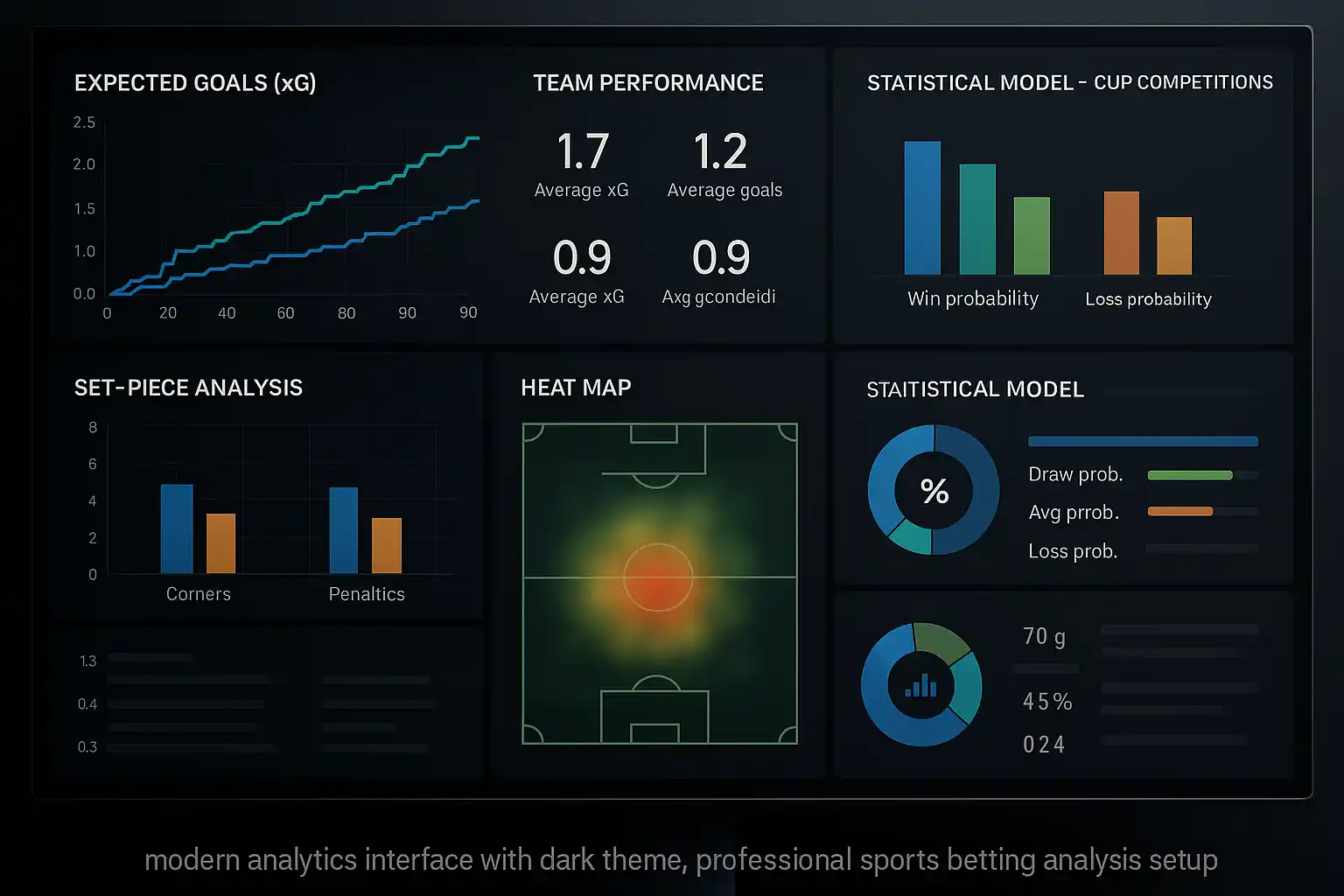
You don't need a PhD in statistics to bet profitably on the Carabao Cup, but understanding which numbers actually matter separates winning bettors from losing ones. Most analytics in football betting is noise dressed up as insight. Here's what actually moves the needle.
Expected goals works differently in cup competitions than in league matches. Over a thirty-eight-game season, xG is predictive because variance evens out. In single-elimination cup matches with rotated squads? It's far less reliable. A team that typically generates 2.0 xG per match might only create 1.2 when they field reserves. Using season-long xG data without adjusting for squad rotation is how analytics nerds go broke betting cups.
The useful application of xG in Carabao Cup betting is comparing reserve players specifically. If you track how Manchester City's second-choice attackers perform in cup matches versus their league appearances, you can estimate their actual attacking output when rotated. This granular approach beats blindly applying team-level statistics.
Squad rotation prediction is the most valuable analytical skill you can develop. Build a database tracking how different managers rotate in cup competitions. Pep Guardiola makes eight to ten changes typically. Jurgen Klopp used to rotate heavily but adjusted his approach in later years. Mikel Arteta has found middle ground with five to seven changes depending on fixture congestion. Knowing these patterns before team news drops gives you hours of edge.
Set-piece proficiency is more important in cup matches where margins are thin. A team that scores thirty percent of its goals from set pieces has a built-in edge against superior opposition because defending set pieces is difficult regardless of squad quality. Identify which underdogs are dangerous from dead balls and which favorites are vulnerable, then bet accordingly.
Defensive fragility matters more than attacking prowess when analyzing rotated squads. A Premier League club's second-choice backline often has zero match sharpness together. They might have individually talented players, but defensive partnerships require rhythm. Betting on these makeshift defenses conceding is usually sharp because chemistry cannot be manufactured.
Bankroll Management and Risk Control
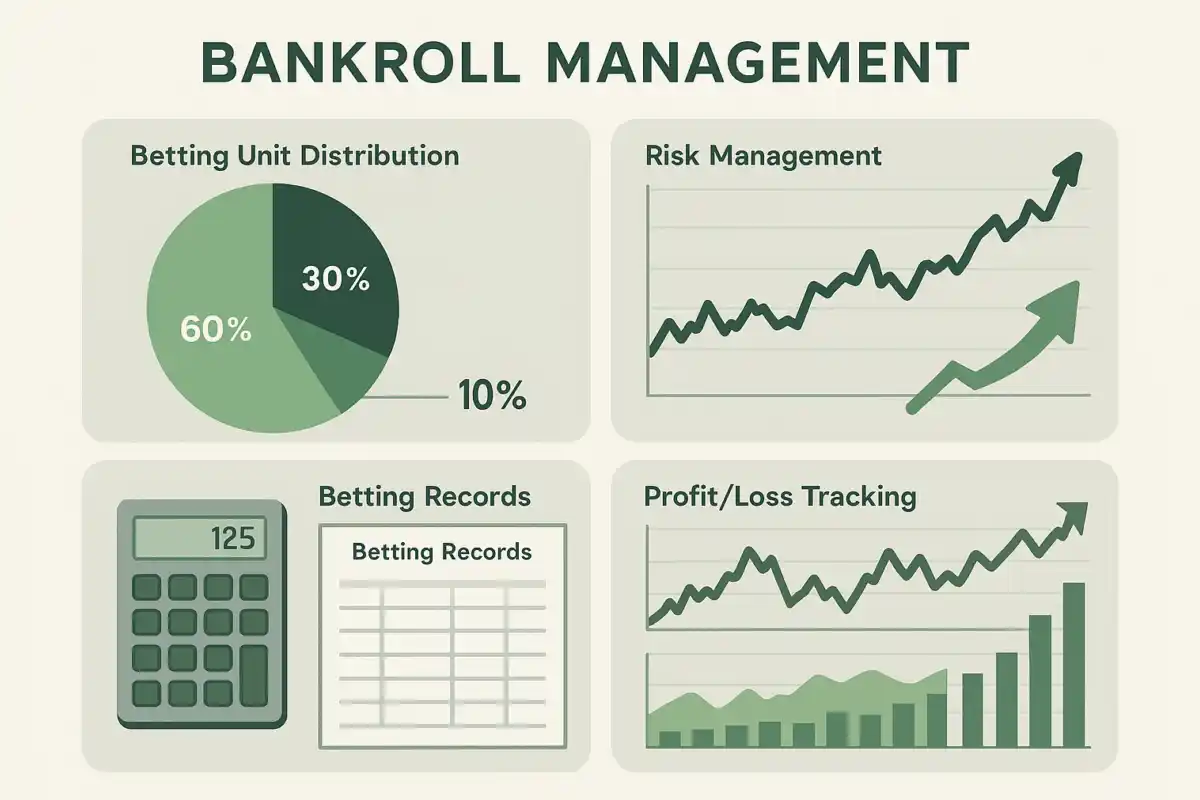
Having the best strategy in the world means nothing if you stake recklessly and bust your bankroll before variance evens out. The Carabao Cup is particularly dangerous because the upsets and chaos create emotional betting opportunities that destroy discipline.
Use a unit-based staking system where one unit equals one to two percent of your total bankroll. This protects you from inevitable losing streaks. Cup competitions have higher variance than leagues, so smaller unit sizes make sense. When Liverpool loses to Grimsby on penalties, you want that loss to sting but not cripple your betting operation.
Separate your cup betting bankroll from your league betting if you're serious about both. They require different risk tolerances and have different variance profiles. Mixing them creates accounting confusion and makes it harder to identify what's working and what isn't.
Record every bet with a simple spreadsheet: date, competition, match, selection, stake, odds, result, profit or loss. Review monthly to identify patterns. Maybe you're profitable betting favorites but losing money backing underdogs. Maybe over goals bets are printing money while accumulators are bleeding you dry. You can't optimize without data.
Common Carabao Cup Betting Mistakes to Avoid
Betting favorites blindly because they're from a higher division. Squad rotation destroys this logic.
Ignoring team news until after kickoff. The edge is in the hour between lineup release and match start.
Building massive accumulators across multiple rounds. Variance compounds. Three legs maximum.
Overvaluing recent league form when squad rotation makes that form irrelevant.
Betting draws in the match result market. Remember, no extra time means penalties, so draws are often pushed or voided.
Chasing losses after upsets. Discipline separates profitable bettors from broke ones.
How to Find the Best Carabao Cup Odds
Shop lines across multiple bookmakers. Odds comparison sites exist for a reason.
Take advantage of new customer offers early in the season when the tournament starts.
Watch for boosted odds on big matches. Bookmakers promote these fixtures aggressively.
Open accounts with multiple bookies to ensure you can always get the best available price on any selection.
Conclusion: Mastering Carabao Cup Wagers
The Carabao Cup isn't glamorous. It's not the Premier League or the Champions League. But that's exactly why it offers value to informed bettors willing to do the work. While everyone's arguing about Liverpool versus Arsenal, you can be exploiting squad rotation patterns in a quarter-final nobody's watching.
The strategies in this guide work because they're built on structural realities: rotation happens, motivation varies, fixture congestion matters, and bookmakers can't price every match perfectly. You don't need insider information or complicated models. You need discipline, systematic analysis, and the patience to wait for genuine value rather than betting every match.
Start small. Track your bets. Adjust your approach based on results. The Carabao Cup runs from August through March every season, giving you dozens of matches to refine your process. Treat it like a laboratory where you can test theories and develop skills that translate to other competitions.
Most importantly, remember that profitable betting is a marathon, not a sprint. The randomness of knockout football means short-term results will vary wildly. Trust the process, manage your bankroll, and let the edges compound over time.
Carabao Cup Betting FAQ
What makes betting on the Carabao Cup different from the Premier League?
Squad rotation is the fundamental difference. Premier League managers field their strongest XIs week after week because league position determines everything: prize money, European qualification, relegation survival. The Carabao Cup offers modest prize money and only the winner gets a Europa Conference League spot most teams don't prioritize. This creates massive lineup uncertainty. When Manchester City fields eight reserves against a Championship side, you're not betting on the team you watched dominate Liverpool on Saturday. Understanding rotation patterns and adjusting expectations accordingly separates profitable Carabao Cup betting from the approaches that work in league competitions.
How do team rotations affect Carabao Cup betting odds?
Bookmakers know rotation happens but struggle to price its impact accurately because every manager handles it differently. When odds are set forty-eight hours before a match, they're based on average expected lineups. But if Liverpool rotates more heavily than expected, those odds don't adjust quickly enough. The edge is in predicting rotation before team news drops, then either betting pre-match if you think books underpriced the changes, or waiting for lineup confirmation and betting immediately after if you were right about the rotation level. The hour between lineup release and kickoff is golden because casual bettors haven't processed the implications yet but sharp money hasn't fully moved lines either.
What's the best time to place outright winner bets for the Carabao Cup?
Never bet outright winners before the third-round draw unless you're getting astronomical odds that account for path uncertainty. The draw determines everything. A team with home matches against lower-league opposition has a completely different path than one facing away trips to elite clubs. Wait until after the third-round draw, analyze each remaining team's potential route to the final, then bet on teams with favorable draws whose odds haven't adjusted to reflect that advantage yet. Another optimal time is after quarter-finals when only four teams remain and you can assess form, fitness, and motivation levels with more accuracy than pre-tournament betting ever allows.
