
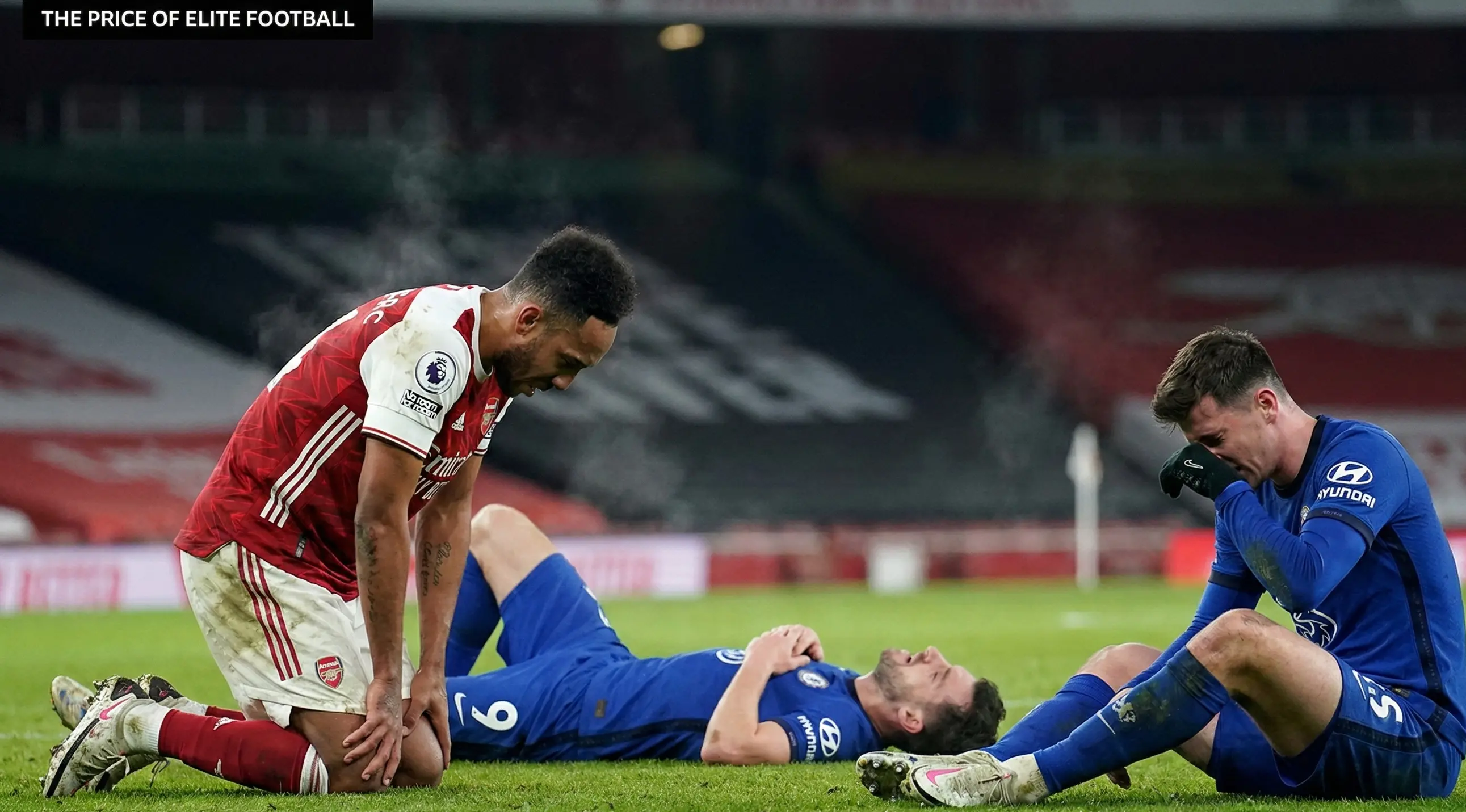
Professional footballers are superhuman in many ways, but they remain bound by biology. Muscles require recovery time. Glycogen stores need replenishing. Central nervous systems demand rest. When fixture congestion compresses recovery windows below physiological thresholds, performance degrades in predictable ways. The Carabao Cup, wedged into schedules already bursting with league and European commitments, creates systematic exploitation opportunities for bettors who understand fatigue dynamics.
The science is unambiguous. Research published in the Journal of Sports Sciences demonstrates that sprint performance remains impaired up to 96 hours post-match. Creatine kinase levels—a marker of muscle damage—peak at 24-48 hours and don’t return to baseline for 72-120 hours. A Barcelona Innovation Hub study concluded bluntly that 72 hours “is not enough recovery time after a match.” When Premier League clubs play Saturday, then face Carabao Cup fixtures on Tuesday or Wednesday, they’re fielding players whose bodies haven’t fully recovered. The question isn’t whether this affects performance; it’s how much, and how to profit from it.
Understanding Recovery Timelines
The 72-hour threshold represents a critical marker in sports science. Within this window, players demonstrate measurable decrements across multiple performance domains. Jump height decreases by 5-12% immediately post-match and may remain suppressed for 72 hours in some players. Sprint capacity drops 3-9% and can take up to 96 hours to fully restore. Hamstring strength—critical for explosive movements and injury prevention—shows consistent decreases throughout the 72-hour window.
These aren’t abstract laboratory findings. They translate directly to on-pitch performance. A midfielder who’s lost 8% of his sprint capacity can’t press as effectively or track runners as consistently. A striker whose jump height has dropped makes fewer aerial challenges and times runs less precisely. A defender whose hamstring strength is compromised gets exposed in foot races and may subconsciously avoid maximum-effort actions that risk injury.
The Premier League has acknowledged these biological realities by ensuring no club plays twice within 60 hours during the festive period. But this protection doesn’t extend uniformly throughout the season, and Carabao Cup fixtures often create precisely the compressed schedules that sports science warns against. A club playing European football on Thursday, Premier League on Sunday, and cup football on Wednesday experiences the kind of fixture chain that research associates with increased injury incidence and decreased performance.
Individual variation complicates prediction. Some players recover faster than others based on genetics, conditioning, age, and position. Midfielders covering 11-12 kilometers per match experience greater glycogen depletion than goalkeepers. Older players typically require longer recovery than younger ones. Players returning from injury may have compromised recovery capacity. These variables mean that even within a single squad, congestion affects players differently.
Identifying Congestion Patterns
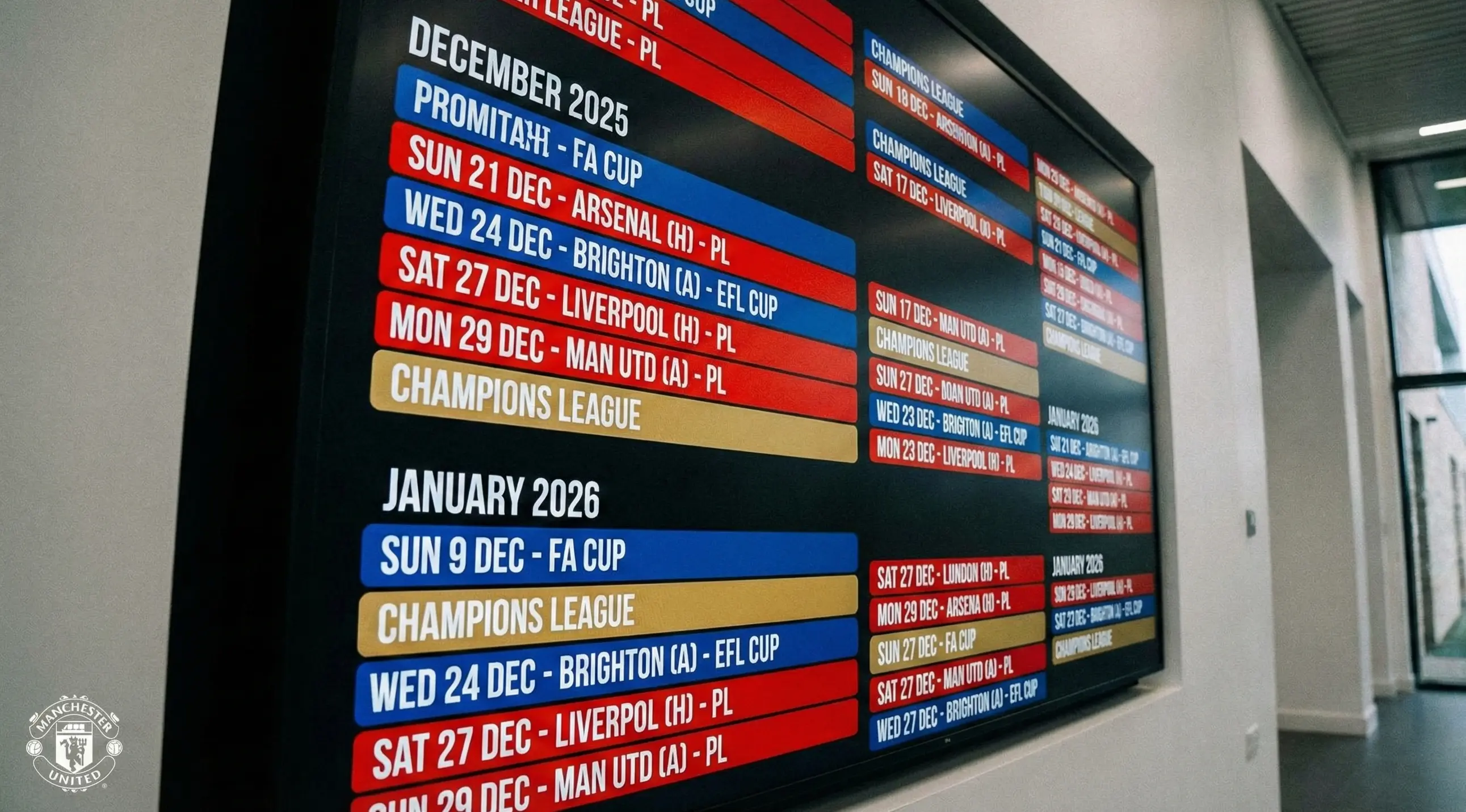
The Carabao Cup calendar creates predictable congestion points that bettors can anticipate weeks in advance. Understanding these patterns allows positioning before odds fully reflect fatigue factors.
Early rounds coincide with European group stage openers. When the third round falls on weeks containing Champions League and Europa League fixtures, clubs competing in Europe face impossible scheduling. The EFL has adapted by splitting third-round fixtures across two weeks, but this merely distributes the problem rather than solving it. Some clubs still face sequences where full recovery between matches is biologically impossible.
The quarter-finals typically fall in mid-December, colliding with the most congested period of the English football calendar. Christmas fixtures create fixture chains of four, five, or even six matches within three-week windows. Clubs in all four competitions—Premier League, Carabao Cup, FA Cup, and European—face scheduling nightmares that force impossible choices between player welfare and competitive ambition.
Semi-finals arrive in January and February, overlapping with the FA Cup restart and Champions League knockout stages. The two-legged format doubles the fixture burden precisely when seasons reach their most demanding phases. Clubs genuinely competing across multiple fronts find their squads stretched to breaking point.
Track each club’s fixture sequence week by week. Calculate the hours between kickoffs rather than days—a Sunday evening fixture followed by Wednesday evening creates different recovery dynamics than Saturday afternoon followed by Tuesday evening, despite the same calendar gap. Note which clubs have European commitments that further compress domestic schedules. These calculations inform expectations about rotation, fatigue, and performance levels.
Fatigue is especially relevant during December football in England.
The Performance Impact on Betting Markets
Fatigue affects different betting markets in distinct ways. Understanding these differential impacts allows targeted market selection based on congestion analysis.
Goals markets respond most directly to congestion. Fatigued defenders make positional errors, mistimed challenges, and lose concentration in critical moments. Research shows injury incidence increases during congested periods, but even when players avoid injury, the accumulated stress reduces defensive coordination. Both teams to score becomes more attractive when either or both teams enter with compressed recovery. Total goals overs gain value as defensive solidity erodes.
First-half markets often underweight congestion effects. Adrenaline and match preparation can mask fatigue in opening exchanges, but the second half reveals accumulated exhaustion. Players who looked sharp at kickoff fade visibly after 60 minutes. Second-half goals become more frequent as tired legs fail to maintain pressing intensity or defensive shape. The market often prices first and second halves similarly despite measurable performance degradation as matches progress.
Cards markets connect to congestion through multiple mechanisms. Fatigued players commit more fouls because they can’t maintain clean positioning. They lunge into challenges because recovering to make proper tackles would require explosive efforts their depleted muscles can’t produce. Referees show sympathy to a point, but accumulated fouls eventually produce cards. Track cards-per-match averages for teams during congested periods versus normal weeks to identify systematic patterns.
Handicap markets sometimes fail to fully adjust for squad rotation driven by congestion. When Manchester City rotate heavily because they’ve played three matches in eight days, their handicap line might only shift by half a goal when the actual performance degradation suggests a full goal or more. The market respects City’s name and depth but may not fully price the difference between Erling Haaland at full capacity versus Oscar Bobb after minimal recovery.
Monitoring Congestion Chains
The concept of “congestion chains” describes sequences where players accumulate fatigue across multiple matches without adequate recovery between any of them. A single match on short rest might be manageable, but three consecutive matches all played within 72 hours of each other creates exponentially greater stress.
European clubs face the longest and most damaging congestion chains. Consider a sequence like: Saturday Premier League, Wednesday Champions League, Saturday Premier League, Tuesday Carabao Cup. That’s four matches in 11 days, with no gap exceeding 96 hours. Players who start all four enter each subsequent match in progressively worse physiological condition. By the fourth match, even elite athletes are running on fumes.
Identify which players have played the highest minutes during congestion chains. Many clubs now employ sports science staff who track accumulated load and mandate rest for players approaching dangerous thresholds. This creates specific betting opportunities—if you can anticipate which players will be rested based on recent load, you gain information edge about likely lineups.
The interaction between congestion and injury creates further complications. Clubs already carrying injuries have less capacity to rotate, forcing their available players to absorb even more minutes during congested periods. This creates a vicious cycle: injury leads to overuse of remaining players, which increases their injury risk, which could reduce squad depth further. Teams caught in this cycle become increasingly vulnerable as seasons progress.
Practical Application for Cup Betting

Building a congestion-aware betting approach requires systematic tracking but delivers consistent edge across seasons. The key is integrating fixture analysis with other factors rather than treating congestion as determinative.
Before each Carabao Cup round, calculate the hours since each club’s previous match and until their next fixture. Note which clubs have played multiple matches in the preceding week and which have had relative rest. Cross-reference with injury lists to assess available squad depth for rotation. These calculations take minutes but provide context that recreational bettors ignore.
Weight congestion more heavily for clubs with thinner squads. Manchester City’s backup eleven might still outclass most opponents; Liverpool’s depleted reserves proved inadequate against Palace. The quality gradient between first and second choice determines how much congestion-driven rotation actually costs a team in expected performance.
Consider the psychological dimension alongside physical fatigue. Clubs fighting for league titles or European knockouts may consciously deprioritize the Carabao Cup during congested periods, fielding weakened teams even when physical recovery would permit stronger selections. Listen to manager press conferences for signals about prioritization—phrases like “managing the squad” or “thinking long-term” often telegraph cup rotation regardless of physical status.
Respect the uncertainty inherent in congestion analysis. Sports science provides averages, but individual variation is enormous. Some players thrive on compressed schedules; others crumble. Some managers extract remarkable performances from fatigued squads through motivation and game management; others watch their tired teams collapse. Use congestion as one input among many rather than the sole determinant of betting decisions.
The Carabao Cup’s position in the fixture calendar—squeezed into midweeks already crowded with other commitments—makes it the competition most affected by congestion dynamics. The teams and players who take the pitch rarely match the ideal versions that odds might imply. Recognizing this biological reality, and quantifying its impact, transforms Carabao Cup betting from reputation-based gambling into something closer to edge-based trading.
Track team fatigue on our wagering portal.
