
Understanding odds shouldn’t feel like deciphering ancient hieroglyphics, yet for many punters, that’s exactly what it feels like when they look at Carabao Cup markets. The numbers dance across the screen, the markets multiply, and somewhere in that chaos is supposed to be value. I get it – I’ve been there, staring at odds boards wondering whether I’m seeing an opportunity or about to make an expensive mistake.
The Carabao Cup presents unique challenges when it comes to odds analysis. Unlike the Premier League where you’ve got season-long form guides and statistical models refined over decades, cup competitions throw curveballs constantly. Team selection becomes guesswork, motivation levels fluctuate wildly, and one-off knockout matches eliminate the safety net of “they’ll bounce back next week.” All of this makes odds more volatile and, frankly, more interesting if you know what you’re looking for.
What I’ve learned over years of betting on this competition is that odds aren’t just numbers – they’re stories. They tell you what bookmakers think will happen, what the betting public believes, and most importantly, where those two things diverge from reality. Finding value isn’t about having a crystal ball that predicts results. It’s about understanding when the price being offered is significantly better than the actual probability of something happening.
This article isn’t going to teach you some revolutionary system that guarantees profits. Those don’t exist, despite what the tipster Twitter accounts claim. What I can show you is how to read Carabao Cup odds properly, identify where bookmakers make mistakes, and develop the skills to spot value that other punters miss. It’s less glamorous than promising you’ll double your money every week, but it’s actually useful.
The Foundation: What Odds Actually Mean
Before we dive into Carabao Cup specifics, let’s make sure we’re on the same page about what odds represent. At their core, odds are the bookmaker’s assessment of probability expressed as a potential return on your stake. When you see odds of 2.00 on a team to win, the bookmaker is saying that outcome has roughly a 50% chance of happening, minus their profit margin.
That profit margin, often called the overround or vigorish, is crucial to understand. Bookmakers aren’t running charities. They build their profit into the odds by making all possible outcomes add up to more than 100% probability. In a typical Carabao Cup match, if you convert all the odds to implied probabilities, they might total 105% or 110%. That extra percentage is the bookie’s cut.
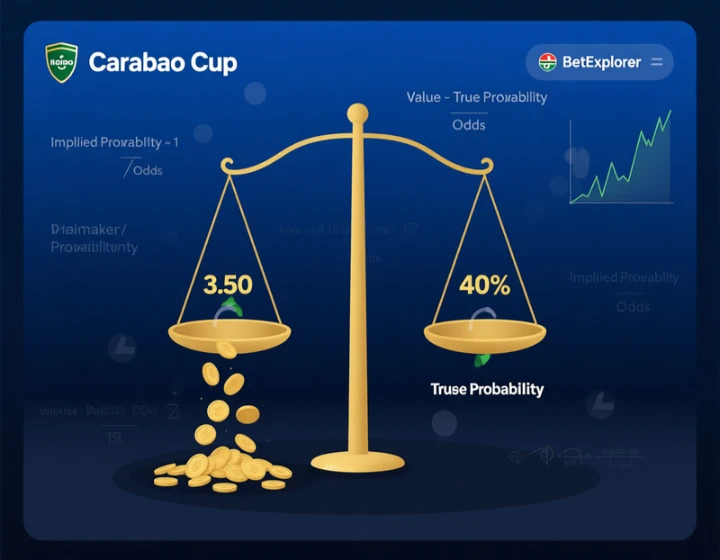
Your job as a value bettor is finding situations where the bookmaker’s assessment is wrong enough that even after accounting for their margin, you’re getting odds that represent genuine value. If you believe something has a 40% chance of happening but you’re getting odds that imply only a 30% chance, that’s value. Do this consistently and you profit long-term, even when individual bets lose.
The decimal odds system is most common nowadays, and it’s beautifully simple – your return is your stake multiplied by the odds. Stake £10 at odds of 3.50 and you get £35 back if you win, which includes your original stake. The older fractional system is still around, particularly with traditional bookies. Odds of 5/2 mean you win £5 for every £2 staked, plus your stake back. Both systems convey the same information, just expressed differently.
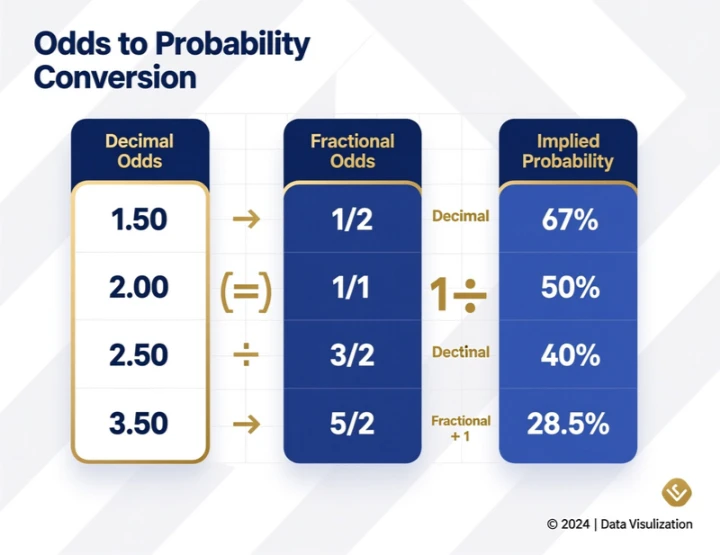
Understanding implied probability is essential for value betting. To convert decimal odds to implied probability, divide 100 by the odds. So odds of 2.50 represent an implied probability of 40%. Odds of 1.50 represent about 67%. When you see Carabao Cup odds, your first mental step should always be converting them to probabilities and asking yourself whether that probability seems accurate based on everything you know about the match.
How Bookmakers Set Carabao Cup Odds
Bookmakers don’t just throw darts at a board when pricing Carabao Cup matches, though sometimes it might feel that way. They use sophisticated models that analyze historical data, team form, head-to-head records, and countless other variables. For Premier League matches, these models are incredibly refined. For cup competitions with heavy rotation, they’re working with much noisier data.

The initial odds you see, often called the opening line, come from the bookmaker’s trading team. These traders are genuinely skilled at what they do. They’ve got access to statistical models, injury reports, and years of experience. But they’re also pricing potentially hundreds of matches across multiple sports, and the Carabao Cup, especially early rounds, doesn’t get the same attention to detail as a Premier League headline fixture.
Once odds are published, they start moving based on betting patterns. If lots of money comes in on one outcome, bookmakers adjust the odds to balance their liability. This creates what’s called market efficiency – as more people bet, the odds theoretically move closer to the true probability. The theory works brilliantly in high-volume markets like Premier League matches where thousands of bets shape the odds. In lower-volume Carabao Cup matches, the market often doesn’t become efficient, leaving value lying around.
Team news dramatically impacts odds, particularly in a competition where rotation is standard. Before team sheets are announced, bookmakers price matches based on expected lineups. Once confirmed lineups emerge, odds can swing violently. A team expected to rotate heavily that fields a strong side will see their odds collapse. Understanding this dynamic helps you time your bets optimally.
Bookmakers also factor in public betting tendencies. They know casual punters love backing big names and favorites, so they’ll shade those odds shorter to protect themselves from lopsided action. Conversely, underdogs in glamour fixtures often offer extra value because bookies are comfortable taking large positions on them, knowing the public will hammer the favorite anyway. This psychological element of odds-setting creates systematic opportunities.
Reading the Match Odds Market
The standard match odds market – home win, draw, away win – is where most Carabao Cup betting happens. It’s also where bookmakers are most confident in their pricing, which means value can be harder to find. But “harder” doesn’t mean impossible, especially when you understand the specific factors that affect these odds in cup competitions.
Home advantage premiums in Carabao Cup odds often exceed the actual home advantage that exists in reality. Bookmakers apply similar home field adjustments as they would for league matches, but cup ties, particularly early-round midweek fixtures, don’t generate the same atmospheric pressure. A Premier League team visiting a Championship ground on a Tuesday night in October isn’t facing a 30,000-strong hostile crowd – they’re facing 12,000 people who’ve shown up out of habit.
Draw odds in knockout competitions present peculiar value. Bookmakers price draws based on 90-minute results, but punters psychologically avoid draws in cup ties because “someone has to win” via extra time or penalties. This creates situations where draw odds drift longer than they should, especially in matches between evenly matched teams or when rotation makes outcomes unpredictable.
Looking at raw odds without context is meaningless. A Championship team at 5.00 to beat a Premier League opponent might look tempting, but if that Premier League team is fielding their under-21s essentially, those odds might actually be terrible value. Context is everything in cup football, and odds often fail to fully capture contextual nuances.
Alternative Markets: Where Value Hides
While most casual punters stick to match result markets, alternative markets often offer better value in Carabao Cup fixtures. These markets receive less attention from both bookmakers and bettors, creating pricing inefficiencies you can exploit.
The “to qualify” market is my personal favorite for cup betting. Instead of needing to predict whether a team wins in 90 minutes, you’re betting on them progressing by any means – regular time, extra time, or penalties. The odds are shorter than match result prices, but the probability of success is significantly higher. In evenly matched ties where penalties are realistic, backing the underdog to qualify at odds around 3.00-4.00 often represents excellent value.
Goals markets behave differently in cup ties compared to league matches. Early rounds often produce goal-fests as mismatched teams meet and rotation creates defensive chaos. Later rounds tend toward cagier affairs as the stakes rise and teams become more conservative. Bookmakers use season-long goal averages that don’t account for these cup-specific dynamics, creating systematic mispricing.
Player-specific markets can be goldmines when you understand rotation patterns. A striker who rarely starts league matches but consistently features in cup ties might have inflated anytime scorer odds based on limited league appearances. Conversely, a team’s primary penalty taker might not even be in the squad, making their scoring odds worthless regardless of the price.
Handicap betting works particularly well in Carabao Cup fixtures where team strength disparities are extreme. A Premier League team giving up a -1.5 or -2.5 goal handicap against lower league opposition might still represent value even with heavy rotation. The class difference between professional levels is massive, and handicaps sometimes fail to fully account for this gap.
Card markets are consistently mispriced in cup competitions. Referees often adopt a more lenient approach in early rounds, trying not to influence matches unnecessarily. Yet card odds are often based on referee season averages that include heated Premier League derbies. Under cards in early round Carabao Cup matches is one of the most consistent value bets I’ve found.
Finding the Best Carabao Cup Odds
Having accounts with multiple bookmakers isn’t just helpful – it’s essential for serious value betting. Odds vary significantly between bookies, and that variance is your profit margin. The difference between 3.50 and 3.75 might seem trivial, but over hundreds of bets, consistently getting the best price is the difference between profit and loss.
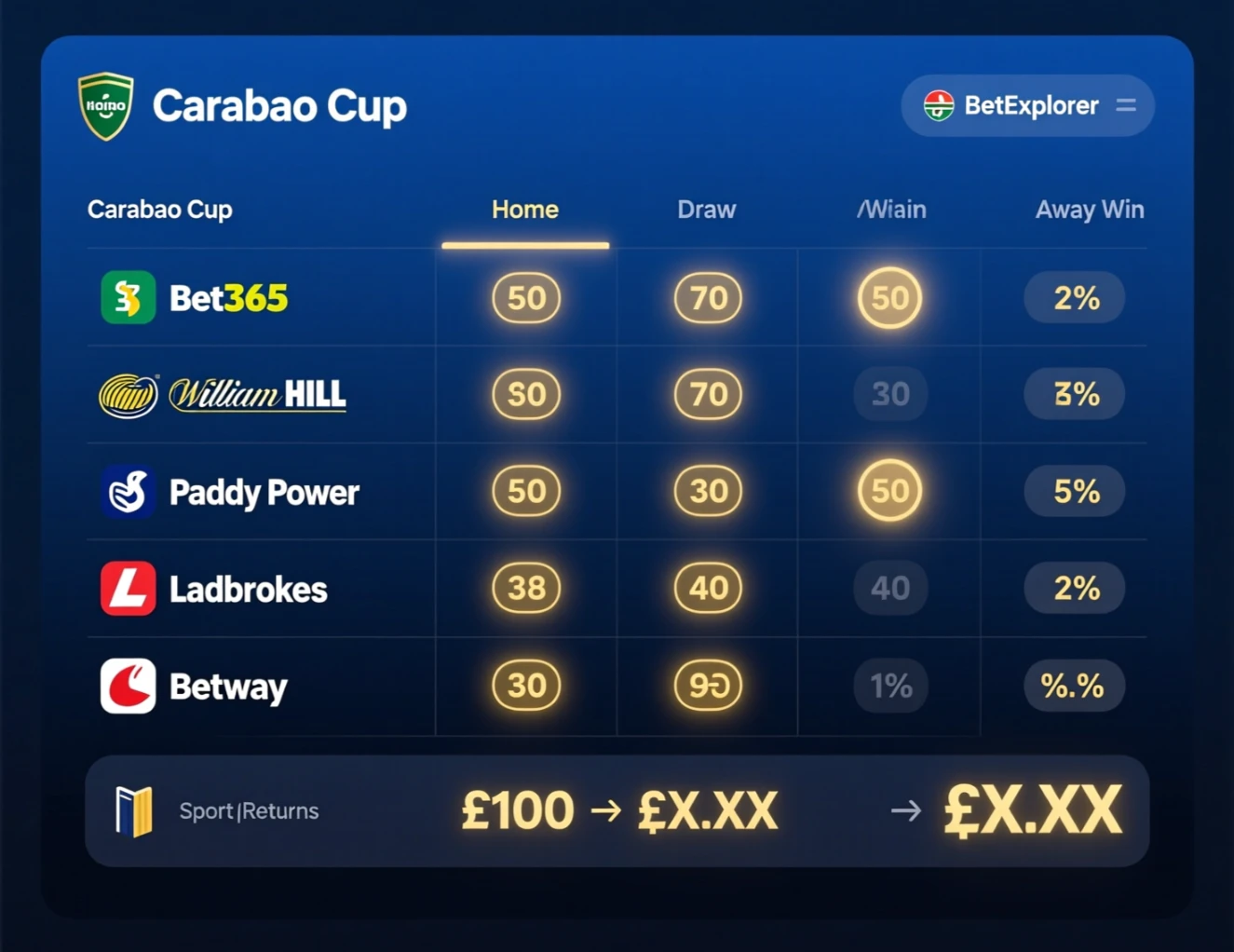
Odds comparison sites make finding the best prices easy, but don’t rely on them exclusively. They don’t always update instantly, and by the time you’ve spotted value and clicked through, the odds might have moved. I maintain a spreadsheet of which bookmakers consistently offer the best odds for different market types and check them directly.
Early prices often offer the best value before sharp money moves them. As soon as Carabao Cup fixtures are announced, bookmakers post preliminary odds. These opening lines haven’t been shaped by betting activity and sometimes contain genuine mistakes. Being ready to bet immediately when odds are released requires preparation but pays dividends.
Some bookmakers consistently offer better odds on specific market types. One might be generous with handicaps, another with goals markets. Over time, you’ll learn which bookies to check first for different bet types. Building relationships with multiple bookmakers also gives you options if one limits your account or restricts certain markets.
Exchange betting through platforms like Betfair introduces another dimension. You’re betting against other punters rather than the bookmaker, which often results in better odds, especially for favorites. The trade-off is commission on winnings, but even after commission, exchange odds frequently beat traditional bookmakers. For Carabao Cup matches, exchange liquidity can be thin in early rounds but improves dramatically for later stages.
Understanding Market Movements
Odds don’t sit still from the moment they’re published until kickoff. They move constantly based on betting patterns, team news, and external factors. Learning to read these movements tells you what information is influencing the market and whether you should follow the money or bet against it.
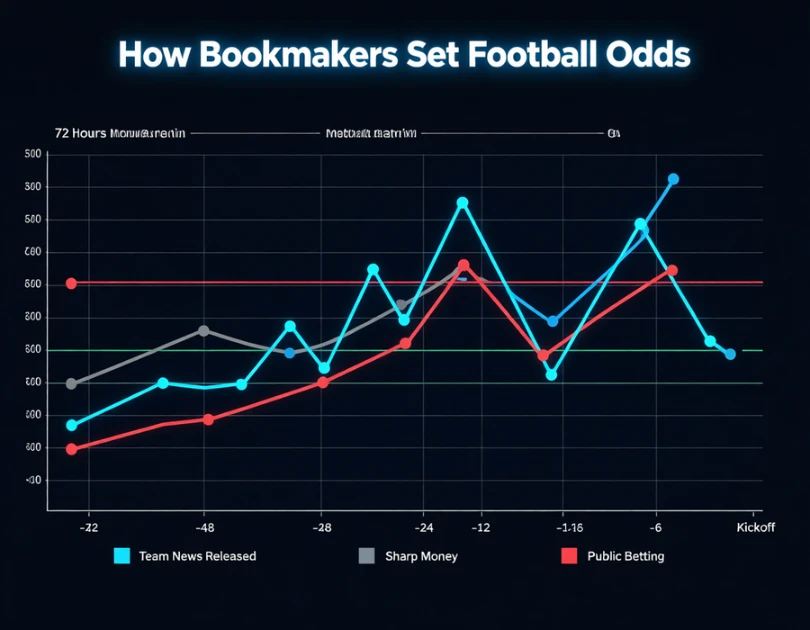
Sharp money – bets from professional or highly informed punters – moves markets quickly and usually in the “correct” direction. When a team’s odds suddenly collapse with no obvious public news, sharp money has probably hit based on some information advantage. Following these moves can be profitable, though by the time you spot them, much of the value has evaporated.
Steam moves are dramatic, coordinated odds changes across multiple bookmakers simultaneously. They indicate something significant has happened – injury news, team sheet leaks, weather changes. In Carabao Cup betting, steam moves around team announcements are common. Being on the right side of these moves means having your bets placed before the information becomes public.
Conversely, public money creates exploitable situations. When a big club is playing in the Carabao Cup, casual punters pile on them regardless of circumstances. This can push their odds shorter than they should be, creating value on the opposition or alternative markets. Betting against public sentiment isn’t always right, but it’s profitable more often than betting with it.
I track odds from publication until kickoff for matches I’m interested in. Significant movements without clear explanation warrant investigation. Has something changed that I missed? Is this sharp money reacting to information, or public money creating false value? Understanding the difference is crucial for timing your bets optimally.
The Psychology of Odds: Why Numbers Lie
Odds create psychological anchors that influence our perception of probability. When you see a team priced at 1.20, your brain automatically thinks “near certainty.” But 1.20 implies an 83% chance, which means roughly one time in six, that bet loses. Over enough bets, those “certain” favorites destroy bankrolls.
The Carabao Cup amplifies this psychological danger because heavy favorites frequently disappoint. Big clubs rotate, motivation wavers, and underdogs raise their game. Yet punters see Manchester City at 1.15 and think it’s free money. It’s not. That price implies a 87% win probability, and given rotation and cup football’s unpredictability, the actual probability might be closer to 75%. That gap is where bookmakers profit.
Round numbers also create psychological price points that don’t reflect actual probability calculations. Odds of 2.00 seem “fair” because they’re even money, but there’s nothing magical about 50-50 probability in football matches. Similarly, odds around 10.00 feel like reasonable longshots, but for outcomes with only a 5-7% actual chance, they’re often terrible value.
I’ve trained myself to think exclusively in probabilities rather than odds. When I see 3.50, I immediately convert to roughly 28.5% chance. Is that outcome really 28.5% likely given everything I know about the match? Usually the answer is either “definitely not” or “possibly.” The “possibly” bets are where value lives. The “definitely not” bets are where I save my money.
Avoid common pitfalls by reading about Carabao Cup betting mistakes.
Combining Markets: Creating Custom Bets
Modern bookmakers offer bet builders and combination markets that let you create custom bets combining multiple outcomes. While these tools are often designed to extract money from casual punters who love parlays, they can occasionally offer value when used intelligently with Carabao Cup fixtures.
The key is finding correlated outcomes that bookmakers price as if they’re independent. For example, in a match where you expect heavy rotation leading to fewer goals, you might combine under 2.5 goals with under 4.5 cards. These outcomes are positively correlated – rotated sides with young players trying to impress typically play cautiously and commit fewer fouls. Yet bet builders often price this combination as if they’re independent events.
Similarly, combining a team to qualify with under goals makes sense in matches you expect to be tight and potentially go to penalties. You’re betting on defensive solidity leading to both a low-scoring match and your team progressing, possibly through a shootout. The correlation works in your favor because if the match is low-scoring, penalties become more likely.
The mistake most punters make is combining uncorrelated or negatively correlated outcomes because they want bigger odds. Backing a team to win comfortably while also backing over goals might seem logical, but you’re often betting against yourself. One outcome makes the other less likely, and bookmakers price these combinations to their advantage.
Value Betting as a Mindset
Understanding Carabao Cup odds isn’t ultimately about memorizing formulas or spotting patterns. It’s about developing a value-first mindset that questions prices rather than accepting them. Every odd is a statement about probability, and every statement can be wrong. Your job is finding those misstatements and exploiting them.
This requires detaching emotion from betting decisions. You might desperately want Newcastle to win the Carabao Cup, but if their odds to beat Liverpool in the final are 4.50 and you genuinely believe their chances are only 15-20%, you shouldn’t bet. Value exists independently of desire. The best bets are often the least emotionally satisfying ones.
The Carabao Cup rewards patience and discipline more than any other competition. The value is there, hiding in midweek fixtures that don’t get the attention of Premier League weekends. Bookmakers make mistakes pricing these matches because their resources are stretched and their models struggle with cup football’s unique dynamics. Your opportunity lies in those mistakes, assuming you’ve developed the skills to spot them.
Reading odds isn’t about finding guaranteed winners – those don’t exist. It’s about finding situations where the price being offered is significantly wrong in your favor. Make those bets repeatedly, manage your bankroll sensibly, and accept the variance that comes with any form of gambling. That’s not particularly exciting advice, but it’s the only advice that actually works over time.
Find overvalued prices on our EFL Cup betting lines.
