
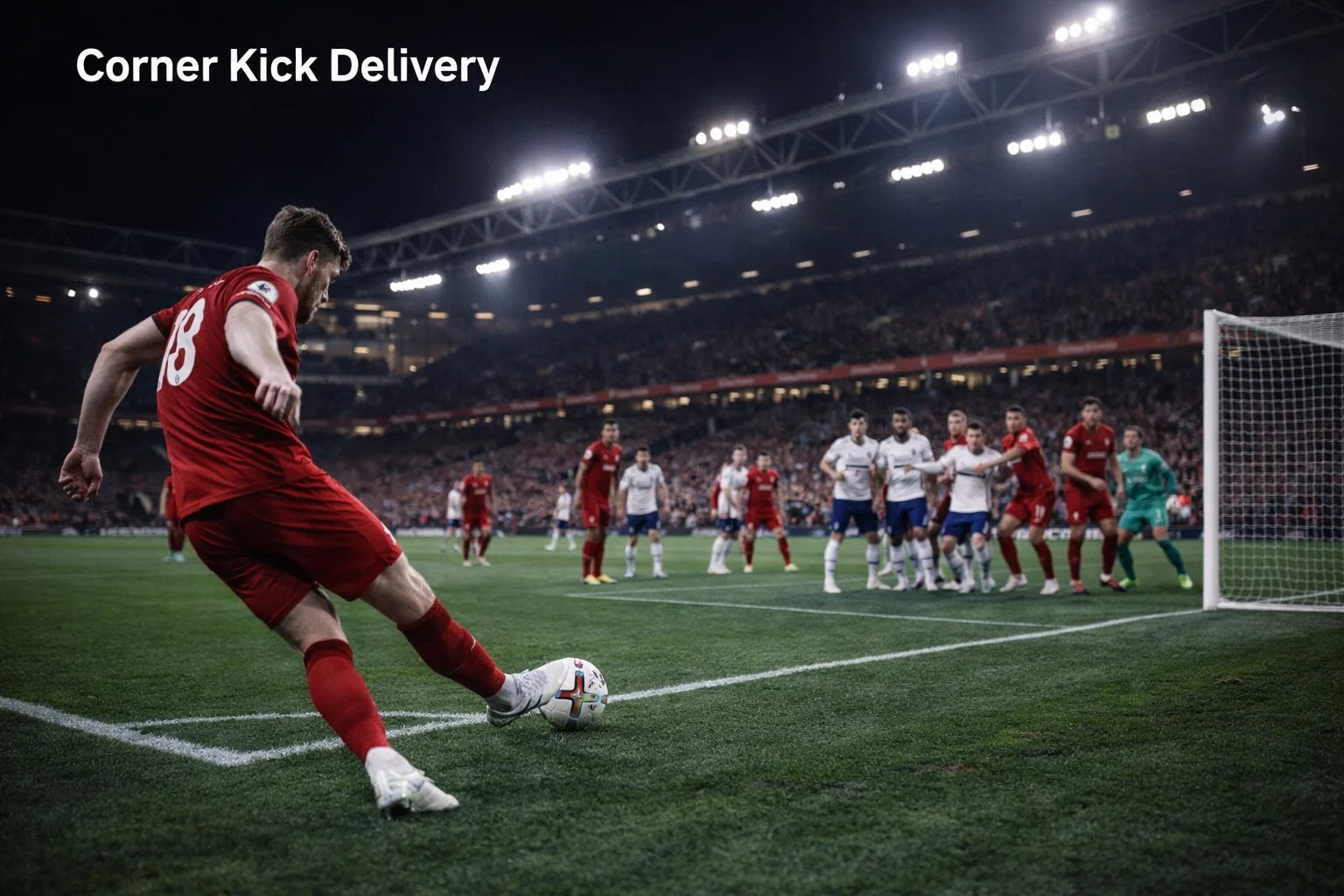
Set pieces account for roughly 25-30% of goals in professional football, a proportion that remains remarkably stable across competitions and quality levels. In the Premier League, dead-ball situations produce approximately one goal every three to four matches per team. This consistency makes set pieces analytically valuable—unlike open-play creation, which depends heavily on individual brilliance and coordinated team movement, set piece effectiveness derives from rehearsed routines, physical attributes, and delivery quality that survive squad rotation better than most tactical elements.
The Carabao Cup’s rotation dynamics amplify set piece importance. When Premier League clubs field reserve lineups against lower-league opposition, their open-play creative advantage often diminishes substantially. The gap between first-choice and backup creative midfielders can be enormous. But set piece threats persist because they depend on different qualities: height advantage at corners, delivery specialists who often play regardless of rotation, and rehearsed movements that any player can execute with basic familiarity.
Understanding set piece dynamics provides betting value that open-play analysis cannot match in cup contexts. Clubs with strong dead-ball records maintain that advantage even when rotating heavily. Clubs vulnerable to set pieces become more vulnerable when reserve defenders—often younger, shorter, or less experienced in aerial duels—replace established partnerships. These patterns create predictable betting opportunities that reward systematic set piece analysis.
Why Set Pieces Matter More in Cups
The quality gap between first-choice and reserve players varies dramatically by position and skill type. Creative playmaking suffers most from rotation—the vision, timing, and technical quality that elite attackers bring cannot easily transfer to backup players. Finishing quality similarly declines when clinical strikers rest. But set piece execution depends on more transferable qualities.
Delivery quality often remains constant because clubs typically protect their dead-ball specialists even during rotation. James Ward-Prowse at free kicks, Trent Alexander-Arnold on corners, or designated penalty takers frequently feature in cup lineups because their specific skills justify selection regardless of overall rotation patterns. When the delivery remains elite, set piece threat persists even with different runners and finishers in the box.
Height and aerial dominance transfer more readily than technical creativity. A backup center-forward who lacks the touch and movement to threaten in open play might still win headers from corners. Young center-backs replacing established defenders often match or exceed their predecessors’ aerial statistics even when their overall defensive reading falls short. Set pieces reward physical attributes that don’t require coordinated team understanding to exploit.
Rehearsed routines require less adaptation than open-play combinations. A near-post corner routine that the first team practices works identically whether regular starters or cup rotation players execute it. The movements are predetermined; players need only remember their roles and timing. This reproducibility means set piece effectiveness carries across lineups in ways that fluid attacking play cannot.
Lower-league clubs often build their entire attacking identity around set pieces. Limited budgets prevent acquiring the technical quality to dominate open play against better-funded opponents, so coaches invest disproportionate training time in dead-ball situations. When these clubs face rotating Premier League opposition in cup ties, their set piece proficiency meets degraded defensive organization—a combination that produces goals market value.
Corners: The Volume Opportunity
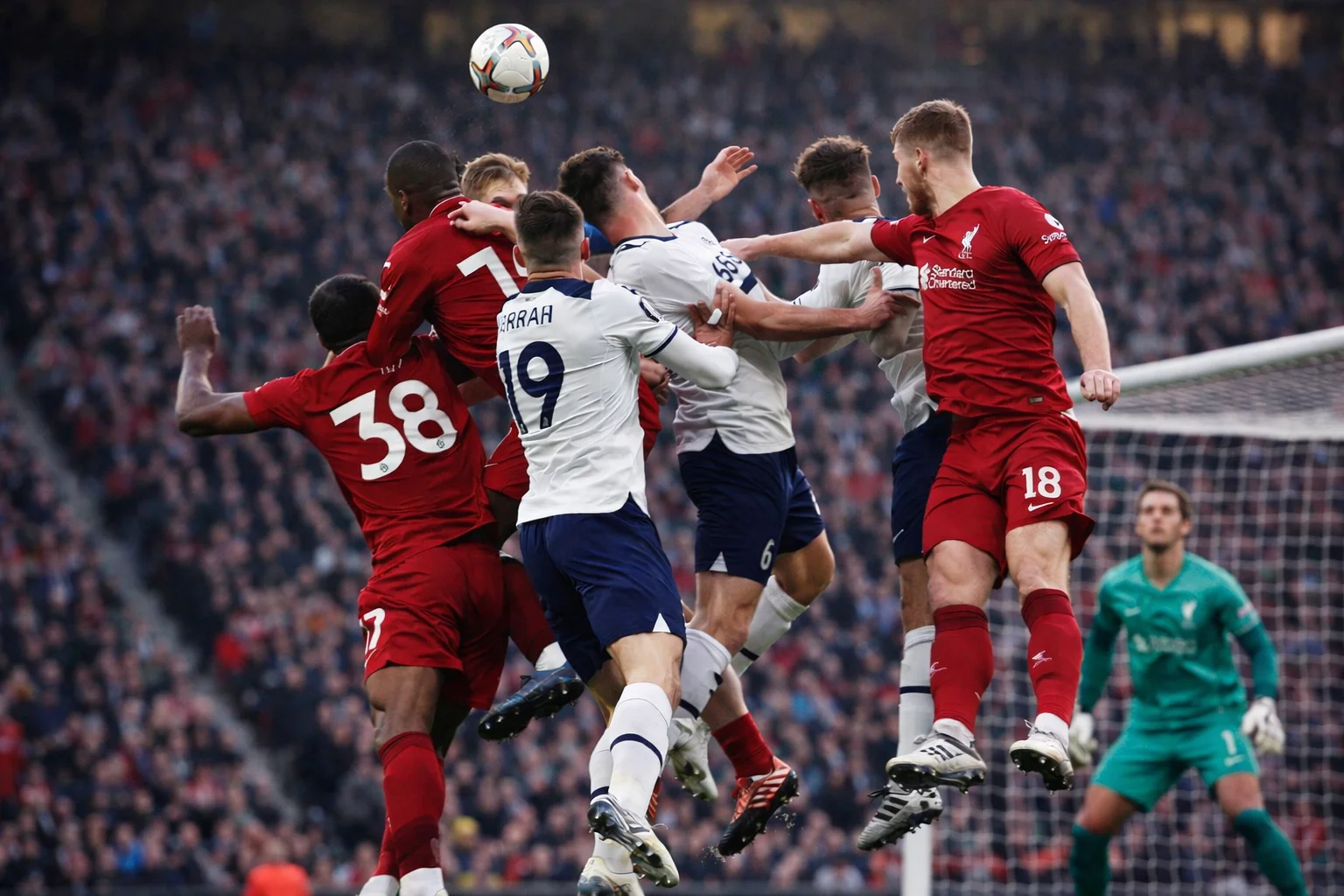
Premier League matches average approximately ten corners per game, with approximately 2-3% of corners directly producing goals. This low conversion rate might suggest corners deserve minimal betting attention, but volume creates opportunity. In a typical Carabao Cup tie, twenty or more corners might occur, meaning one goal from corners represents normal statistical expectation. The question becomes which team scores it.
Inswingers produce higher goal rates than outswingers (approximately 2.7% versus 2.2% in Premier League data), making delivery preference analytically relevant. Teams like Arsenal, who take nearly all corners as inswingers, maintain this pattern regardless of which players actually deliver. Tracking corner-taking preferences allows prediction of set piece threat even before lineups confirm which specific player delivers.
Near-post corners and flick-on routines show higher conversion rates than direct far-post deliveries—approximately 4.8% versus 2% in some analyses. Teams with established near-post routines maintain this tactical approach across cup rotations because the pattern, not individual brilliance, drives success. Identifying which clubs favor near-post routines allows specific predictions about corner threat quality.
Defensive corner vulnerability often exceeds attacking corner efficiency as a betting predictor. Teams that concede frequently from corners in league matches typically concede even more frequently when reserve defenders replace established partnerships. The coordination required to defend corners—communication, marking handoffs, second-ball reactions—degrades faster with personnel changes than attacking patterns do.
Zonal versus man-to-man defensive schemes show different vulnerability patterns. Man-to-man marking systems depend heavily on individual matchups—when those matchups change through rotation, effectiveness varies unpredictably. Zonal systems depend more on organization and coaching, potentially maintaining effectiveness better when personnel changes. Understanding each club’s defensive set piece philosophy improves predictions about concession likelihood.
Match intensity is often linked to motivation metrics in early rounds.
Free Kicks: Quality Over Quantity
Free kicks in dangerous positions occur less frequently than corners but convert at higher rates when delivered by specialists. Direct free kick conversion rates hover around 5-7% for elite takers but fall dramatically for non-specialists. This variance makes personnel identification crucial for free kick betting analysis.
Clubs with dedicated free kick specialists—Ward-Prowse historically, Alexander-Arnold currently, or various Championship-level dead-ball experts—maintain this threat regardless of overall rotation. Knowing whether the free kick specialist plays in a given cup tie dramatically affects expected free kick threat. When specialists rest, free kick threat essentially disappears as non-specialists rarely convert.
Indirect free kicks from wide positions function similarly to corners, with delivery quality and aerial threat determining effectiveness. The same principles apply: clubs protecting their delivery specialists maintain threat; clubs rotating their best crossers lose it. Tracking which wide players feature in cup lineups indicates indirect free kick threat levels.
Defensive free kick concession rates in league matches predict cup vulnerability. Teams that concede frequently from dead-ball situations typically do so because of organizational weakness or height disadvantage rather than individual player errors. These structural vulnerabilities persist across lineups—the coaching methodology and squad composition that produce league vulnerability apply equally to cup fixtures.
Building Set Piece Betting Strategy

Pre-match analysis should identify each team’s set piece profile: Do they create threat from corners? Do they concede from set pieces? Do their delivery specialists typically play in cup ties? Do their reserve defenders lack height or aerial experience? These questions produce actionable predictions before lineup confirmation.
Lineup confirmation then refines predictions. Check for corner/free kick delivery specialists, primary aerial threats, and defensive set piece organizers. When key set piece personnel feature, expect effectiveness to match league levels. When they rest, adjust expectations accordingly—usually downward for attacking threat, upward for defensive vulnerability.
BTTS markets often offer value when both teams show set piece threats but open-play limitations. A lower-league club with excellent corner routines facing a rotating Premier League side with defensive set piece vulnerability creates BTTS conditions even if open-play quality mismatch favors the higher-ranked club. Set pieces provide the equalizing mechanism that makes both-teams-to-score likely.
First goalscorer markets sometimes offer value on aerial specialists in cup ties. When corners become primary attacking avenues due to open-play limitations, the tallest players or best headers receive disproportionate goalscoring opportunities. Identifying which aerial threats play in specific cup lineups reveals first goalscorer value that standard analysis might miss.
Card markets correlate with set piece dynamics. Teams defending many corners often commit more fouls in their own box. Teams relying on set pieces for attacking threat sometimes commit tactical fouls in dangerous positions to create free kick opportunities. Understanding set piece emphasis on both sides reveals card betting opportunities that pure quality analysis would overlook.
Match flow often features set piece clusters. When one team wins several consecutive corners, the second or third corner of the sequence often produces shots or goals because defensive organization degrades with repeated defending. Tracking in-play corner sequences reveals live betting opportunities when set piece pressure accumulates.
The Carabao Cup rewards set piece specialists precisely because the competition’s rotation dynamics level other quality differentials. Bettors who systematically analyze dead-ball capabilities—and ignore the noise of open-play quality gaps that rotation eliminates—find value that less specialized approaches consistently miss.
Profit from dead-ball situations on our starting betting page.
