

The Carabao Cup semi-finals stand alone in the competition’s structure: the only round played over two legs, introducing aggregate scoring dynamics that fundamentally change betting strategy. Four teams compete across two fixtures each, with leg sequence, home advantage distribution, and aggregate positioning creating opportunities unavailable in single-match cup betting. Understanding how to approach two-legged ties—and specifically how Carabao Cup semi-finals differ from European two-legged formats—reveals value that single-match thinking misses.
Semi-final first legs occur in the week of January 12th, with second legs following in the week of February 2nd. This three-week gap creates its own dynamics: form can shift dramatically between legs, injuries can alter squad composition, and psychological states evolve based on first-leg results. The extended timeframe also means fixture congestion differs between legs, potentially affecting rotation and freshness in ways that matter for aggregate outcomes.
The abolition of away goals (from 2021) changes two-legged strategy compared to historical patterns. Teams no longer benefit disproportionately from away scoring, removing the tactical incentive to play conservatively at home while seeking away goals. Instead, aggregate scoring alone determines progression, with penalties following if scores remain level after the second leg. This rule change produces different match dynamics than football historians might expect from European knockout comparisons.
First-Leg Dynamics
First-leg matches typically produce conservative approaches from both teams. Neither wants to concede aggregate deficits that force second-leg desperation; both prefer competitive positions heading into return fixtures. This mutual caution often produces lower-scoring matches than underlying team quality would suggest in one-off fixtures. Under 2.5 goals frequently offers value in first legs when both teams prioritize avoiding mistakes over forcing advantages.
Home advantage in first legs creates interesting strategic considerations. The team playing at home first can establish aggregate leads that away teams must overcome in hostile environments. Alternatively, playing away first allows teams to understand what they need before their home leg—a draw or narrow defeat away leaves everything achievable at home. Managers have expressed different preferences, but empirical evidence suggests first-leg home advantage provides modest but real benefits.
Draw frequency increases in first legs because the incentive structure rewards not losing more than it rewards winning. A 0-0 or 1-1 first leg leaves both teams with genuine second-leg chances; a 2-0 defeat creates difficult but not impossible situations. This draw incentive means backing the draw in first legs—or using draw no bet protections—often offers better value than outright winner markets where decisive results are underpriced.
The absence of extra time until the second leg affects first-leg approach. Managers know that even 0-0 after ninety minutes simply produces a level aggregate heading to the second leg. This removes late-game desperation that might create goals; teams accept draws more readily when progression remains achievable. First-leg markets that assume normal single-match goal-scoring patterns may misprice this structural difference.
Second-Leg Dynamics
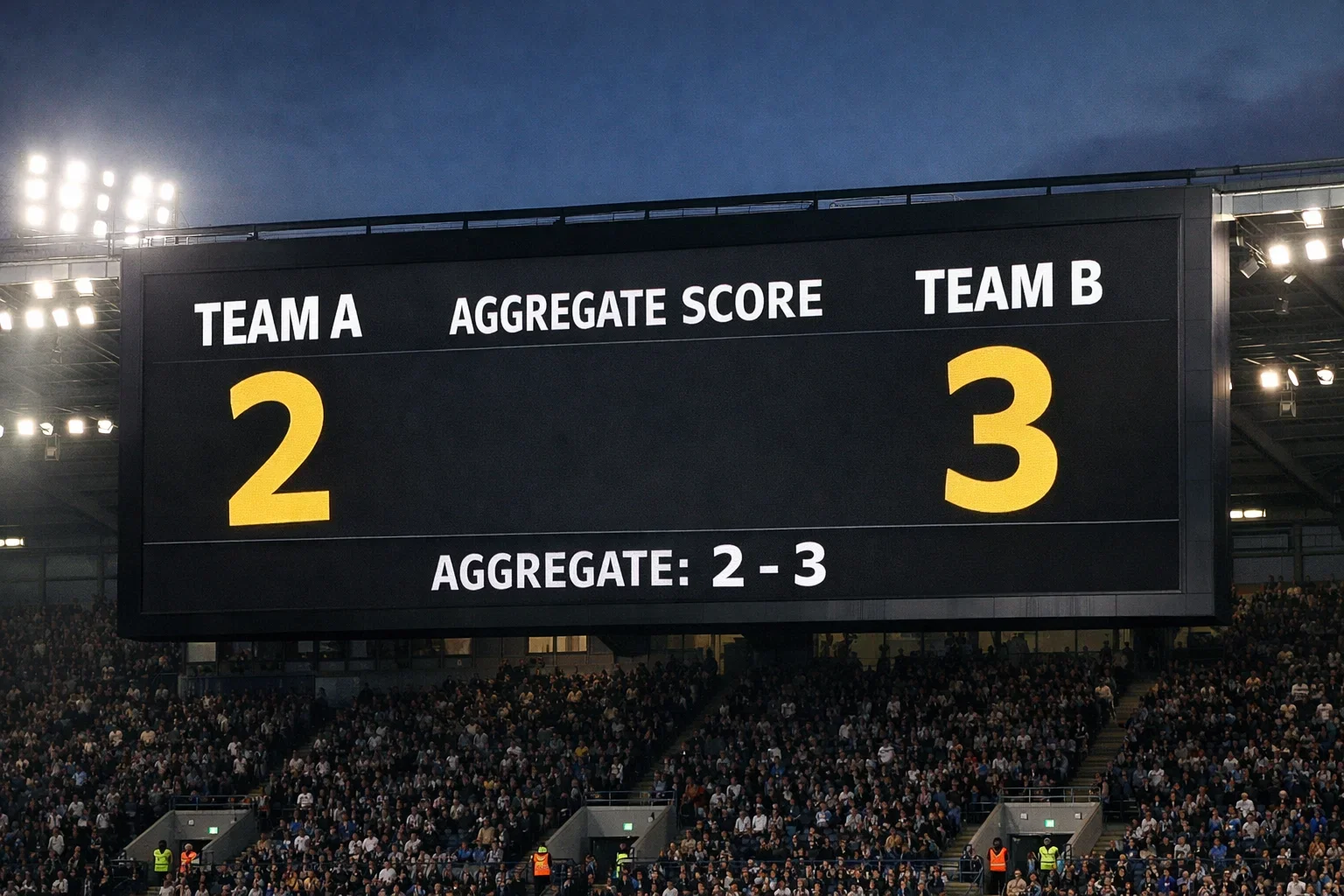
Second-leg matches depend entirely on first-leg results, making pre-first-leg betting on second legs speculative. However, once first legs complete, second-leg markets offer value because aggregate positions create predictable game-state dynamics that oddsmakers must estimate while you can observe actual tactical situations.
Trailing teams must attack in second legs, creating open matches that favor over goals bets. A team two goals behind after the first leg cannot protect and hope—they must score at least twice while preventing opposition goals. This forces aggressive approach that creates chances for both sides. When first legs produce decisive results, second-leg overs become attractive regardless of which team is ahead.
Leading teams face strategic choices that affect second-leg dynamics. Some protect aggregate advantages through defensive setups that minimize risk. Others continue attacking, seeking insurance goals that remove comeback possibilities. Manager tendencies and specific lead sizes influence which approach appears. Understanding how specific managers typically protect leads improves second-leg predictions.
Penalty shootout probability increases in second legs because aggregate draws proceed directly to spot-kicks (with no extra time before semi-final second legs). If first legs end 1-1, for example, any identical second-leg scoreline produces penalties. Teams with superior shootout capabilities gain implicit advantages that second-leg markets may not fully capture.
The final goal for every team is the Wembley final betting event.
Aggregate and To Qualify Markets
Aggregate outcome markets allow betting on total scoring across both legs without predicting individual match results. If you believe a matchup will produce high-scoring football regardless of leg distribution, aggregate over 4.5 or 5.5 goals captures that thesis efficiently. These markets suit situations where you have conviction about matchup dynamics without strong views on individual leg outcomes.
To Qualify markets on individual teams offer straightforward semi-final betting. Rather than predicting leg results, you’re simply selecting which team progresses to the final. This simplicity has value when first-leg results create situations where second-leg dynamics become complex. Once you know a team leads 2-0 after the first leg, qualification probability changes in ways that match result odds must estimate—qualification markets directly capture what you’re actually predicting.
Qualification markets after first legs reflect both aggregate position and second-leg home advantage. A team trailing 1-0 but with the home second leg still has genuine chances that market pricing must capture. Understanding how different aggregate positions translate to actual qualification probability—based on historical comeback rates and specific team capabilities—reveals whether post-first-leg qualification prices offer value.
Live qualification betting during second legs captures evolving aggregate positions. If your pre-match view on qualification becomes more likely as second legs progress, live markets may lag in adjustment. Conversely, if unlikely comebacks begin materializing, live qualification odds on trailing teams may improve faster than justified by actual probability changes.
Specific Semi-Final Considerations
The Carabao Cup final’s proximity affects semi-final motivation. Teams reaching semi-finals are two matches from Wembley silverware—the competition’s secondary status diminishes as finals approach. Expect stronger lineups and more serious approaches than earlier rounds produced. Rotation calculations that applied in third or fourth rounds no longer govern team selection.
January timing creates fixture congestion considerations. Premier League clubs face busy schedules; FA Cup third-round fixtures fall nearby; European competitors (if still involved) have Conference League knockouts resuming. Mapping each semi-finalist’s specific fixture context around both legs improves lineup predictions and freshness assessments.
The three-week gap between legs allows significant form evolution. A team struggling domestically during the gap might approach their second leg with different confidence than their first-leg performance suggested. Monitoring league results between legs provides context for second-leg expectations that first-leg markets couldn’t anticipate.
Weather and pitch conditions in January affect match quality. Heavy, cold conditions slow play and reduce technical execution. Both legs may face similar conditions, or conditions might differ significantly between fixtures. Checking forecasts before both legs adds information that two-legged betting strategies should incorporate.
Building Two-Leg Betting Expertise

Two-legged ties reward thinking in aggregate rather than individual matches. Developing frameworks for assessing qualification probability based on different first-leg results—and understanding how specific teams perform when ahead or behind on aggregate—improves prediction accuracy across the format.
Historical semi-final patterns provide baseline expectations. Track how often first-leg results accurately predict qualifiers, how frequently comebacks occur, and which aggregate margins create genuine drama versus near-certainties. This historical grounding prevents overreaction to individual first-leg results.
The semi-final represents the Carabao Cup’s most strategically complex round. Two-legged format, aggregate scoring, leg timing, and January congestion create dynamics that single-match cup betting doesn’t prepare you for. Building specific expertise in two-legged tie analysis—rather than applying standard match betting frameworks—reveals value that more casual approaches consistently miss.
Gana on the home stretch on our cup expert site.
