

Cup football produces wilder swings than league betting. The rotation dynamics, motivation asymmetries, and knockout format that create betting opportunity also create variance that destroys unprepared bankrolls. A bettor who applies league-appropriate staking to Carabao Cup betting will experience larger drawdowns, longer losing streaks, and greater emotional pressure than their league betting produces. Surviving cup betting’s inherent volatility requires adapted bankroll management that accounts for the competition’s unique characteristics.
The fundamental principle remains constant: bet sizes must be small enough that inevitable losing streaks don’t eliminate your ability to continue betting. In league football, where outcomes are more predictable, slightly larger stakes might survive variance. In cup football, where rotation creates systematic uncertainty and upsets occur more frequently, conservative staking becomes essential. The edge you might have in cup betting—understanding rotation patterns, motivation differentials, or lineup timing—means nothing if you’ve exhausted your bankroll before variance allows that edge to materialize.
This article addresses recreational bettors treating betting as entertainment with money they can afford to lose, as well as more serious bettors pursuing long-term profitability. The principles apply regardless of bankroll size, though specific unit sizes and stake amounts will differ based on individual circumstances. What matters is the proportional relationship between stakes and total bankroll, not the absolute numbers involved.
Understanding Cup Variance
Variance describes the natural fluctuation in results that occurs even when your predictions have positive expected value. A bettor who correctly identifies value—situations where the true probability of outcomes exceeds what odds imply—will still experience losing streaks because probability doesn’t guarantee short-term results. Cup football amplifies this variance through several mechanisms.
Rotation uncertainty means even well-analyzed predictions can fail when unexpected lineups appear. You might correctly assess that a rotating Premier League side offers value against a motivated lower-league opponent—only to discover the Premier League club fields a stronger-than-expected lineup because of midweek fixture cancellation. Your analysis was sound; the outcome just didn’t match expectations. This type of variance is irreducible without perfect information.
Upset frequency in cup football exceeds league football. Even when favorites win most matches, the upset rate—perhaps 10-15% for significant upsets—creates losing streaks that feel longer than pure probability suggests. A bettor backing Premier League clubs in early cup rounds will occasionally see three or four consecutive upsets despite each individual prediction being reasonable.
The knockout format produces one-off results without opportunity for regression. In league football, a team that underperforms one match has another chance next week. In cups, that one match eliminates them. This binary outcome structure—advance or exit—amplifies the impact of individual match variance on betting results.
Penalty shootouts introduce pure chance elements. When matches proceed to penalties, approximately 75% conversion rates meet genuine uncertainty about which team wins. Your pre-match analysis might have correctly identified the superior team; the shootout outcome has minimal relationship to that analysis.
Unit Sizing for Cup Betting

Professional bettors typically recommend risking 1-3% of bankroll per bet in standard conditions. Cup betting warrants the lower end of this range—1-2%—because higher variance requires more conservative exposure. At 1% per bet, you can survive losing streaks of twenty or more matches without catastrophic bankroll damage. At 3%, a fifteen-match losing streak halves your bankroll.
Calculate your cup betting unit by dividing your total betting bankroll by 100. If your bankroll is £500, your cup betting unit should be £5. This feels conservative—£5 bets on matches you’ve analyzed carefully seem inadequate to your perceived edge. But this conservatism protects you from the variance that will inevitably occur regardless of your analytical quality.
Consider maintaining separate mental allocations for league and cup betting. Your total betting bankroll might support 2% units on league matches where you have stronger conviction and more predictable outcomes. Cup matches then receive 1% units reflecting their higher uncertainty. This differentiated approach acknowledges that not all betting opportunities carry identical variance profiles.
Avoid the temptation to increase stakes after winning streaks. Cup betting wins can come in clusters—several correct predictions in a row creating the illusion that your edge is larger than it actually is. Increasing stakes during these periods exposes you to larger losses when variance inevitably reverses. Flat staking—the same unit size regardless of recent results—protects against this psychological trap.
Staking Strategies for Cup Contexts
Flat staking represents the simplest and often most effective approach: bet the same amount on every selection regardless of confidence level or odds. This removes decision-making complexity and prevents overconfidence from inflating stakes on picks that subsequently lose. For cup betting’s high-variance environment, simplicity offers genuine value.
Percentage staking adjusts bet size based on current bankroll: always bet 1% of your current total. After wins, stakes increase slightly; after losses, they decrease. This approach automatically reduces exposure during losing streaks (when you can least afford large losses) and increases exposure during winning streaks (when you can best afford variance). The drawback is tracking complexity and potentially reducing stakes to impractically small amounts during extended downswings.
Confidence-based staking scales bets according to perceived edge: 1 unit on standard picks, 2 units on higher-confidence selections. This approach works if you can accurately assess confidence levels—but most bettors overestimate their confidence accuracy. In cup football where uncertainty is inherent, claiming high confidence on any selection deserves skepticism. If using this approach, limit “high confidence” designations to perhaps 10% of your selections and never exceed 2 units on any single cup bet.
Avoid progressive staking systems like Martingale (doubling after losses) entirely. These systems appear to guarantee eventual profit but actually accelerate bankroll destruction. A five-match losing streak at doubled stakes eliminates thirty-one units—a catastrophic loss that flat staking would have limited to five units.
Managing Drawdowns
Drawdowns—periods when your bankroll sits below its previous peak—occur inevitably in any betting activity. Cup betting produces longer and deeper drawdowns than league betting because higher variance means more extended periods before positive results materialize. Preparing psychologically for drawdowns prevents the emotional responses that compound losses.
Establish drawdown limits before betting. Decide in advance: if my cup betting bankroll drops 30% from its peak, I will pause betting and reassess my approach. This predetermined stopping point prevents chase behavior—the destructive pattern of increasing stakes or abandoning strategy during losing periods. Sticking to your normal approach during drawdowns often leads to recovery; abandoning discipline usually accelerates losses.
Track cup betting separately from league betting if both contribute to your activity. This separation prevents successful league betting from masking cup betting problems (or vice versa). If your cup betting consistently loses while league betting wins, the problem likely lies in your cup-specific analysis rather than general betting approach.
Review losing periods analytically rather than emotionally. Were your predictions wrong, or did variance produce unexpected results from sound predictions? If rotation patterns surprised you repeatedly, adjust your rotation prediction approach. If your predictions were reasonable but results went against you, maintain your approach and trust that variance will eventually favor you again.
Practical Bankroll Rules
Never bet money needed for essential expenses. This sounds obvious but bears emphasis. Betting bankrolls should contain only money you can genuinely afford to lose without affecting your life. Cup betting’s high variance makes this principle especially important—extended losing streaks occur even with sound analysis.
Maintain liquidity for opportunity capture. Don’t commit your entire cup betting allocation to early rounds when later rounds may offer superior opportunities. Budget across the competition’s timeline, reserving adequate units for semi-finals and finals where your analysis might provide clearer edge than chaotic early rounds.
Set session limits for individual cup matchdays. When multiple matches occur simultaneously, the temptation to bet on everything can exceed your planned exposure. Decide before each matchday: I will bet on maximum X matches today. This prevents impulsive betting that inflates total exposure beyond planned levels.
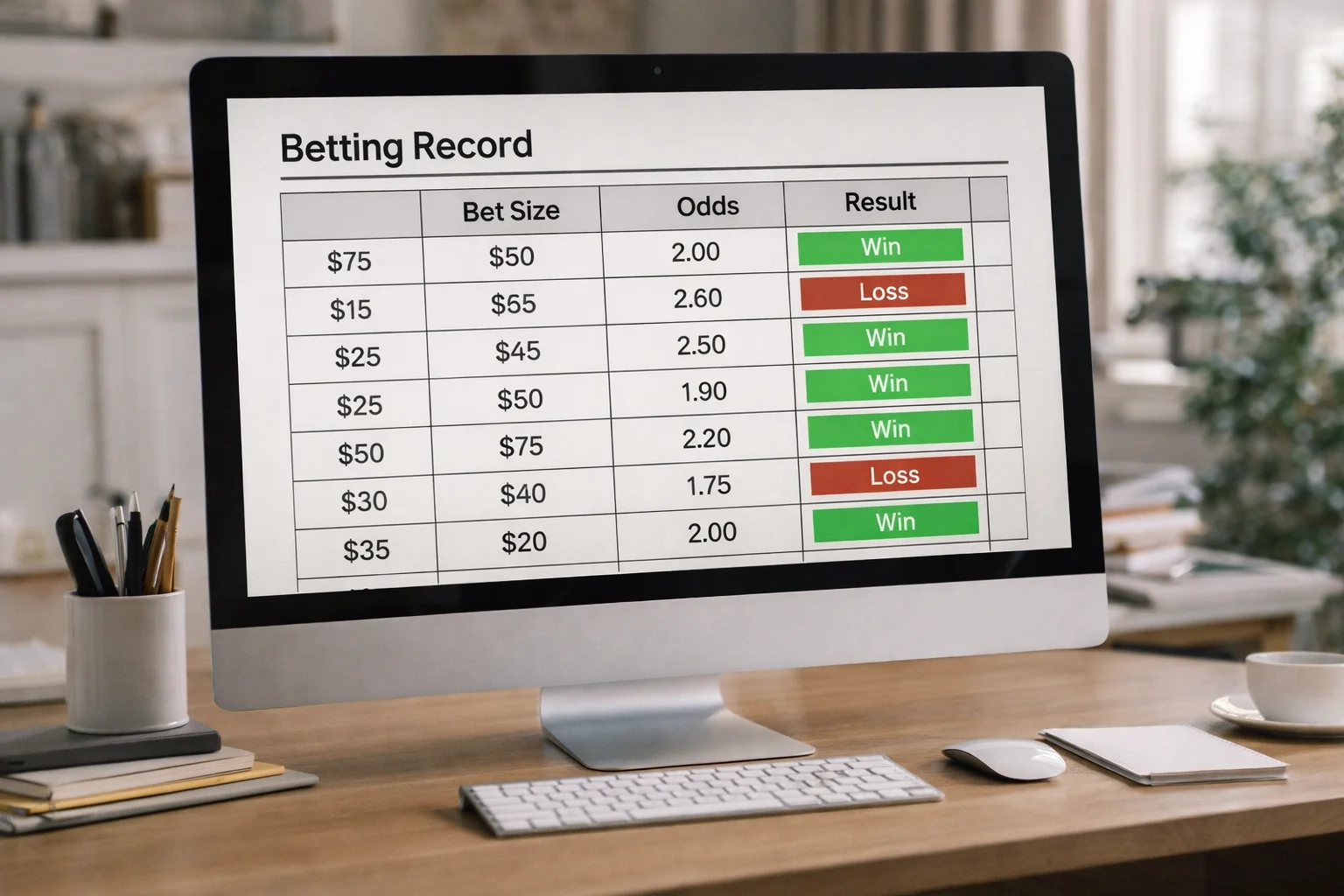
Record every bet with stake size, odds, result, and profit/loss. This tracking enables honest assessment of your cup betting performance over time. Without records, confirmation bias distorts memory—you remember impressive wins and forget accumulated losses. Data doesn’t lie; memory does.
Check out our general advice on bankroll requirements.
Conclusion: Long-Term Perspective on Bankroll Management
Cup betting profitability, like all betting profitability, manifests over hundreds or thousands of bets rather than individual sessions. Your goal isn’t to win today’s cup matches; it’s to make decisions that produce positive expected value across many seasons of cup betting. This long-term perspective makes short-term variance emotionally manageable.
The Carabao Cup occurs annually with approximately 90-100 matches per season. Even dedicated cup bettors might place 50-100 cup bets per season. At this volume, meaningful performance assessment requires multiple seasons of data. A single season’s results—even a losing season—doesn’t definitively prove your approach works or fails. Maintain consistent methodology across seasons, track results carefully, and assess performance over multi-season timeframes.
Cup betting should enhance your football enjoyment, not create stress or financial pressure. If drawdowns produce anxiety that affects your daily life, your stakes are too high relative to your financial situation. Reduce unit sizes until losing streaks, when they occur, produce disappointment rather than distress. The right bankroll management makes cup betting sustainable entertainment regardless of short-term results.
Maintain financial discipline on our League Cup hub.
