
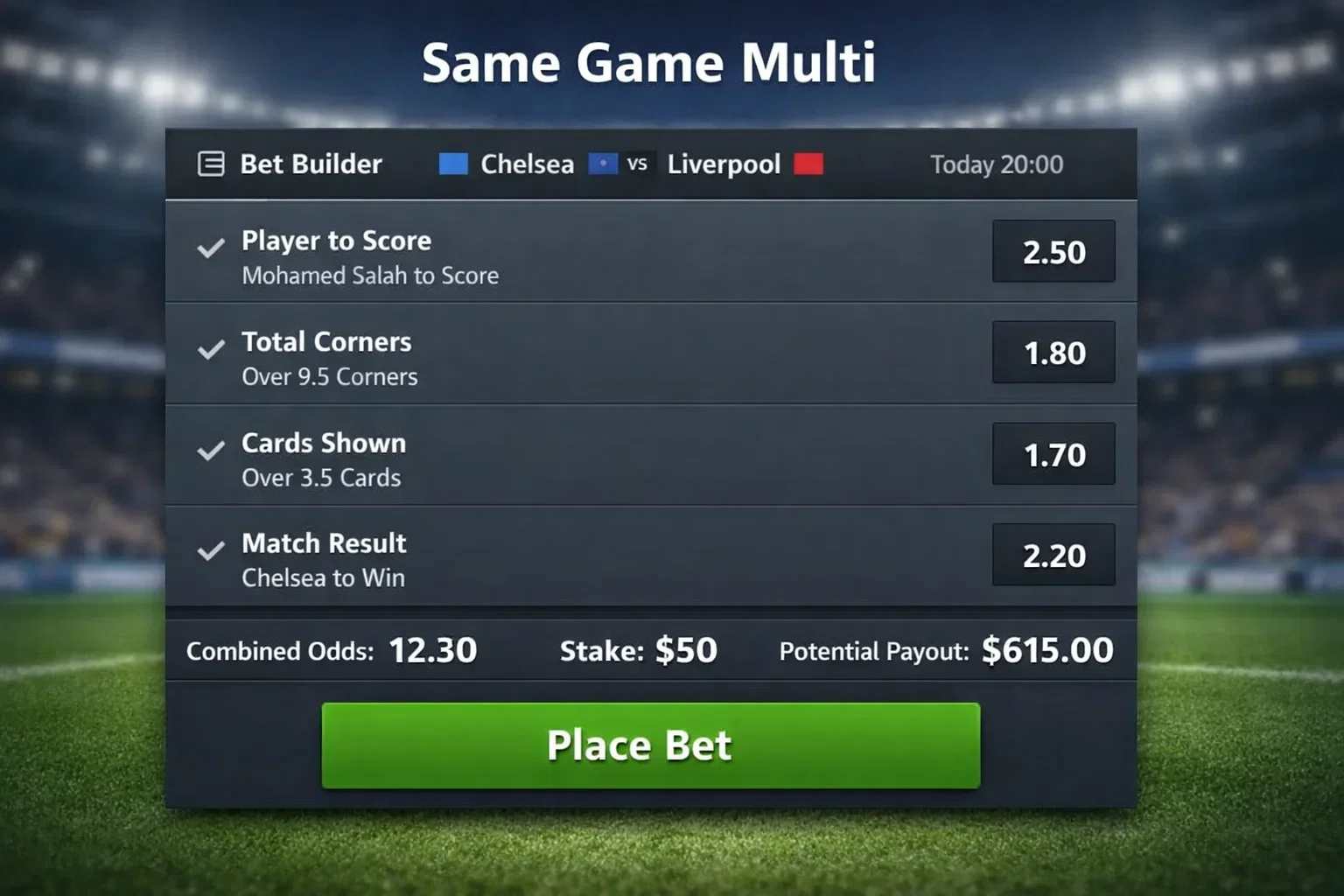
Same game multis—also called bet builders or same game parlays—allow bettors to combine multiple selections from a single match into one wager. Rather than backing a team to win and separately backing over 2.5 goals, you can combine these selections with multiplied odds. This format suits Carabao Cup betting particularly well because cup-specific knowledge often generates predictions about match dynamics beyond simple outcomes. When you expect a rotating Premier League side to win comfortably against lower-league opposition, that prediction implies related expectations about goals, corners, cards, and player performance that same game multis can capture.
The challenge with same game multis lies in understanding correlation—the degree to which different outcomes relate to each other. Some combinations naturally go together: a team winning comfortably often correlates with higher total goals, more corners for the dominant team, and fewer cards for players under less defensive pressure. Other combinations conflict: backing a heavy favorite to win and backing the underdog’s striker to score creates internal tension within your multi. Building effective same game multis requires identifying combinations where your core prediction supports all included legs.
Bookmaker margin application to same game multis varies significantly and often exceeds standard accumulator margins. The complexity of calculating correlated probabilities gives bookmakers pricing flexibility that savvy bettors should recognize. Even when your analysis correctly identifies logical combinations, pricing may eliminate the value your analysis created. Critical evaluation of offered odds—not just combination logic—determines whether specific same game multis offer genuine value.
Building Cup-Specific Combinations
The rotation dynamics that define Carabao Cup betting create predictable match patterns that same game multis can exploit. When Premier League clubs rotate heavily against lower-league opposition, several correlated expectations emerge.
Dominant but slightly chaotic matches often occur when quality gaps exist alongside defensive disorganization. A same game multi combining: favorite to win, over 2.5 goals, and BTTS captures the pattern of quality advantage producing goals while rotated defenses also concede. These three selections correlate positively in rotation contexts—each becomes more likely when the others occur.
Corner dominance follows from possession dominance. When expecting Premier League reserves to dominate territory against lower-league opposition, combining match winner with corner handicap lines (favorite -3.5 corners) captures coordinated prediction about match flow. The team winning typically also wins corner count, especially when lower-league opponents defend deep against superior possession.
Card patterns respond to match dynamics predictably. Lower-league teams facing superior opposition often commit tactical fouls to prevent attacks developing. Combining match result (favorite) with total cards over 3.5 or specific player cards on defensive midfielders captures this coordination. The competitive approach that produces cards also tends to produce the dominant possession that favors the better team.
Goalscorer combinations with match results deserve careful correlation consideration. Backing a specific first goalscorer and the same team to win creates positive correlation—if your scorer scores first, their team likely wins. But backing goalscorers from both teams within a BTTS multi creates tension: you need both teams to score, which makes close matches more likely than comfortable victories.
Combine your multis with the safety of accumulator betting techniques.
Correlation Principles

Understanding correlation prevents self-contradicting same game multis that require internally inconsistent outcomes.
Positive correlation occurs when events support each other. A team winning and their key player scoring positively correlate—both become more likely together. Same game multis should primarily contain positively correlated selections that represent consistent match predictions.
Negative correlation occurs when events work against each other. Backing under 1.5 goals alongside BTTS (both teams to score) creates negative correlation—these outcomes rarely occur together. Same game multis containing negative correlations essentially guarantee failure.
Uncorrelated selections neither support nor oppose each other meaningfully. A corner count might be uncorrelated with which team wins in certain contexts. Including uncorrelated selections doesn’t create contradiction but doesn’t provide the efficiency that positively correlated combinations offer.
Bookmakers adjust same game multi odds to account for correlation. When you combine positively correlated selections, fair odds should be lower than simple multiplication would suggest because the events support each other. Bookmaker correlation adjustments vary in accuracy; sometimes they over-adjust (creating poor value) and sometimes they under-adjust (creating opportunity). Comparing the offered same game multi odds against what simple multiplication would produce reveals the bookmaker’s implied correlation assessment.
Effective Cup Multi Templates
Certain same game multi structures suit cup contexts consistently well. These templates provide starting points for match-specific adaptation.
The “comfortable win” template combines: favorite to win, favorite over 1.5 team goals, and over 2.5 match goals. This structure captures expecting the better team to score multiple times in a high-scoring match. It suits fixtures where quality gaps produce attacking dominance, such as third-round ties between European-competing clubs and surviving lower-league opposition.
The “competitive cup tie” template combines: BTTS, over 2.5 goals, and one player from each team to have 1+ shot on target. This structure captures expecting open, attacking football without strongly predicting the winner. It suits fixtures where rotation and motivation create uncertain outcomes but likely goals, such as second-round matches between rotating Championship clubs and ambitious League One sides.
The “disciplinary cup tie” template combines: over 3.5 total cards, underdog +2.5 goals handicap (protection against blowout), and under 3.5 corners for underdog. This captures expecting a competitive match where the weaker team defends physically but doesn’t dominate territory. The combinations support each other: physical defense produces cards while territorial dominance by the favorite limits underdog corners.
The “set piece threat” template combines: over 9.5 total corners, BTTS, and over 2.5 goals. This captures expecting a match where set pieces create goalscoring opportunities for both teams. It suits fixtures where aerial threats on both sides create danger from corners and free kicks—a pattern common in cup ties where lower-league physical presence meets Premier League reserve defenders.
Pricing Evaluation
Same game multi odds vary dramatically across bookmakers despite identical underlying markets. The correlation adjustments bookmakers apply differ, sometimes creating significant pricing discrepancies. Shopping same game multi odds across multiple bookmakers—just as you would with standard bets—often reveals substantial differences.
Compare offered same game multi odds against what simple multiplication would produce. If your three selections have individual odds of 1.5, 1.8, and 2.0, simple multiplication produces 5.4. If the bookmaker offers 4.0 on the same game multi, they’re applying approximately 26% correlation discount. Whether this discount is accurate depends on actual correlation between your selections—high positive correlation might justify this discount, but uncorrelated selections wouldn’t.
Evaluate same game multi promotions skeptically. “Bet builder boosts” that enhance same game multi odds often still leave odds below fair value despite the enhancement. Promotions designed to encourage same game multi betting exist because the product generally favors bookmakers—enhancements reduce this advantage without eliminating it.
Avoid overcomplicating same game multis with many legs. Each additional leg adds margin and increases the probability that at least one selection fails. Three or four legs typically represent the sweet spot—enough combination to create meaningful odds enhancement without excessive complexity or failure probability.
Practical Application

Start with your core cup match prediction: what do you expect to happen and why? If you expect a rotating Chelsea side to dominate territory against a motivated League One club but concede from set pieces, build your same game multi around this expectation. Each leg should flow logically from your core prediction rather than feeling like unrelated additions.
Track same game multi performance separately from other bet types. The format’s unique characteristics—correlation adjustments, higher margins, increased complexity—mean performance may differ from standard betting. If records show consistent same game multi losses despite standard betting success, the format might not suit your analytical approach.
Same game multis work best when cup-specific knowledge creates match dynamic predictions beyond simple outcome betting. If your analysis produces rich predictions about how matches will unfold—not just who wins—same game multis capture that value. If your analysis produces only outcome predictions, standard single bets probably serve better.
Build your winning slips on our starting cup dashboard.
